
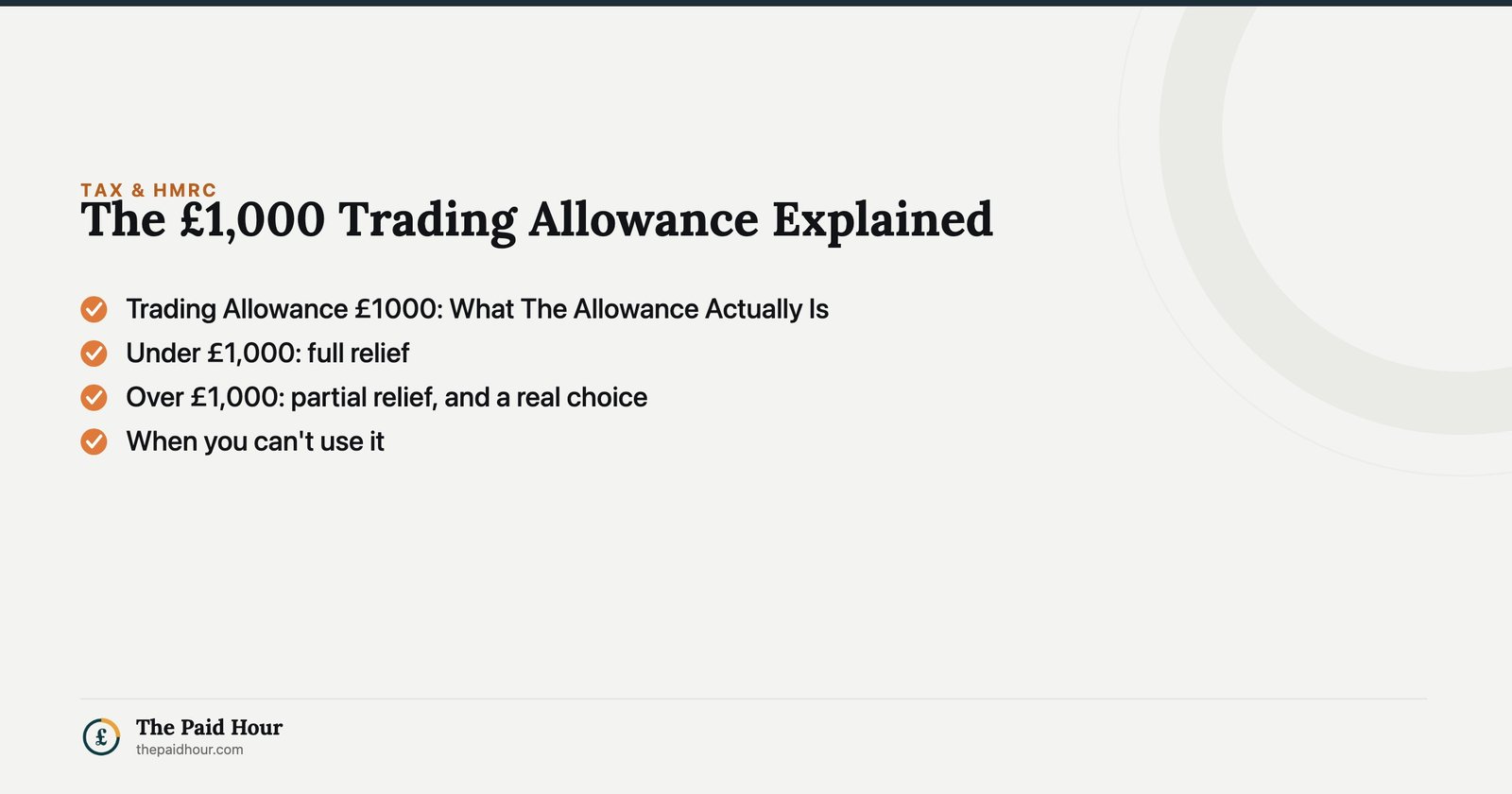
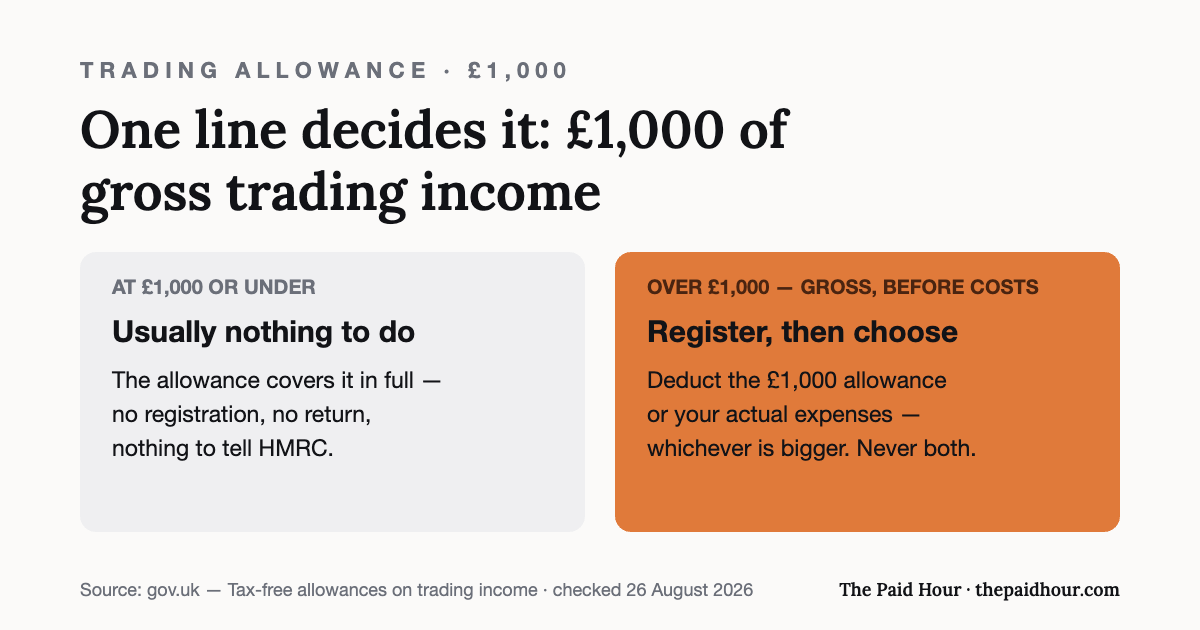
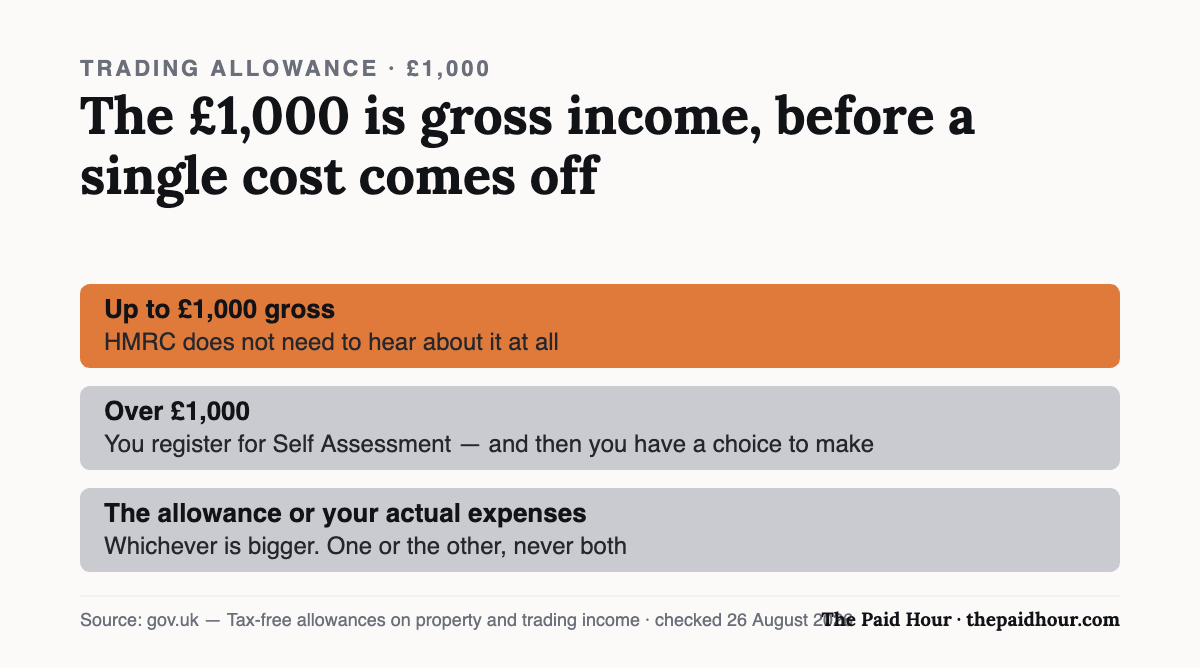
The short version: Earn up to £1,000 of gross trading income in a tax year and HMRC does not need to hear about it. Over the line, you register for Self Assessment and then choose: the £1,000 allowance or your actual expenses, whichever is bigger. Gross means before any costs come off.
Table of Contents
Trading allowance £1000 is the figure to know first: it lets you earn up to £1,000 a year of gross trading income without telling HMRC about it at all. Above £1,000 you must register for Self Assessment, by 5 October in the following tax year, but you can still deduct the £1,000 instead of your expenses. You can’t do both. And “not having to tell HMRC” isn’t the same as “not having to keep records”: you still have to keep them.
What the trading allowance actually is
It’s a tax exemption of up to £1,000 a year on trading income, and it’s applied since 6 April 2017. It covers self-employment, casual work like babysitting or gardening, and hiring out personal equipment such as power tools.
There’s a separate £1,000 property allowance for income from land or property. If you’ve got both kinds of income you get £1,000 for each, they don’t share a single limit.
The critical word throughout is gross. It means the total that came in, before you take off a single expense. Someone who invoiced £1,400 and spent £500 on materials has gross trading income of £1,400 rather than £900. They’re over the line.
Under £1, 000: full trading allowance relief
If your gross trading income for the tax year is £1,000 or less, you generally don’t have to tell HMRC about it or declare it on a return. HMRC calls this full relief. For a side project that earned a few hundred pounds, that is the end of it.
Three caveats attached to that comfortable sentence.
- You must still keep records of the income. HMRC lists invoices, a spreadsheet of receipts, bank statements, emails confirming payment, or an appointments diary. It can charge a penalty if your records aren’t accurate, complete and readable, or if you don’t keep them long enough.
- You may still need to file for another reason. The allowance removes this income from the equation; it doesn’t exempt you from Self Assessment generally.
- Some people can’t use it at all, see below.
Worth knowing: there are situations where you should choose to register even though you’re under £1,000. If you made a loss and want to claim relief for it; if you want to pay voluntary Class 2 National Insurance to protect your record; if you want to claim Tax-Free Childcare based on self-employment income; or if you want to claim Maternity Allowance. In each case you register voluntarily and can still use the allowance on the return.
Over £1, 000: partial relief, and a real choice
Above £1,000 you must register for Self Assessment and declare the income. But you then get a genuine decision: deduct the £1,000 allowance, or deduct your actual allowable expenses. Whichever you pick, you can’t also claim the other, and if you claim the allowance you can’t claim capital allowances either.
Which option leaves you with less taxable profit depends on one number: your expenses.
The arithmetic isn’t complicated, and it produces a rule you can apply in ten seconds:
If your allowable expenses come to less than £1,000, claim the allowance. If they come to more, claim the expenses.
A tutor with £5,000 of income and £700 of costs is better off with the allowance: £4,000 taxable rather than £4,300. A photographer with the same £5,000 of income but £2,200 of kit and travel should claim the expenses instead: £2,800 taxable instead of £4,000.
One limit: you can’t deduct more than your income and create a loss with the allowance. And if your expenses exceed your income, claiming actual expenses is the route that lets you claim the loss.
The allowance also has a quiet second benefit for very small operations: use it and you don’t need to justify every expense. No receipts to categorise, no arguments about the business proportion of your phone bill. For someone earning £1,500 from a weekend sideline, that simplicity’s worth more than a few pounds of tax.
When you can’t use the trading allowance
The allowance is blocked entirely if the trading or property income comes from:
- a company you or someone connected to you owns or controls
- a partnership where you or someone connected to you are partners
- your employer, or your spouse’s or civil partner’s employer
That third one is the trap. Doing a bit of freelance work on the side for the company that employs you, or for your partner’s employer, puts that income outside the allowance completely. It’s a deliberate anti-avoidance rule, and it catches people who had no intention of avoiding anything.
The trading allowance also doesn’t apply to income from a partnership.
The trading allowance thresholds, in one place
| Situation | What HMRC expects |
|---|---|
| Gross trading income £1,000 or less | Usually nothing to report, but keep records |
| Gross trading income over £1,000 | Register for Self Assessment by 5 October in the following tax year |
| Other gross income over £1,000 up to £2,500 | Contact HMRC |
| Other income over £2,500 | Register for Self Assessment |
| Gross property income over £1,000 | Declare your property income |
Miss that 5 October date and register late, and you open yourself up to a failure-to-notify penalty on top of everything else, the detail’s in what a late return costs. Trading allowance £1000 is the number that decides whether you register with HMRC at all.
What to do about the trading allowance
- Add up your gross income from the side work, everything that came in, before costs.
- If it’s under £1,000, check you’re not in one of the blocked categories, keep your records, and get on with your life.
- If it’s over £1,000, register by 5 October following the end of that tax year.
- Then total your allowable expenses. Under £1,000, claim the allowance. Over £1,000, claim the expenses.
- Check the figure again next year. The right answer changes the year you buy a laptop.
Related: what counts as an allowable expense is what makes the comparison above possible in the first place.
Related: what HMRC now sees from Vinted, eBay and Etsy, the reporting threshold is not the same thing as the allowance.
One cost of using the allowance: you cannot also claim expenses or capital allowances against the same income.
A job plus a side income: where does it land?
Side Hustle Tax Starter 2026/27. A six-module starter course and six working templates that tell you, in an evening, whether you owe anything at all, and set up the twenty-minute monthly routine that keeps it that way.
- The nine badges of trade as questions you can answer about your own income
- What the platforms send HMRC, the small-seller exemption, and three reply letters for when a letter arrives
- A sales log with a running £1,000 alert, an allowance-versus-expenses sheet, and a tax set-aside calculator at 2026/27 rates
Selling platforms now hand your sales data to HMRC once a year. Selling your own old possessions is never taxable. Buying to resell, making things, or freelancing is. Knowing which side you are on is the whole question.
Buying more than one? All ten 2026/27 courses for £107, against £328 at full price.
If the allowance no longer covers you, which Self Assessment registration route you need explains how to register before 5 October.
Over the £1,000 in 2025/26? The date to register by is 5 October 2026: how to register as a sole trader with HMRC.
Sources
- HMRC: Tax-free allowances on property and trading income
- GOV.UK — Become a sole trader
- GOV.UK, Expenses if you are self-employed
- GOV.UK. Check if you need to send a Self Assessment tax return
The allowance rules re-checked against gov.uk on 26 August 2026.
Thresholds checked 19 August 2026. This is general information, not financial or tax advice. If your situation involves a company or partnership you’re connected to, or work for your own employer, take advice, those are exactly the cases the rules are written to catch.