
Business Travel or Commuting? It Is Not About Distance
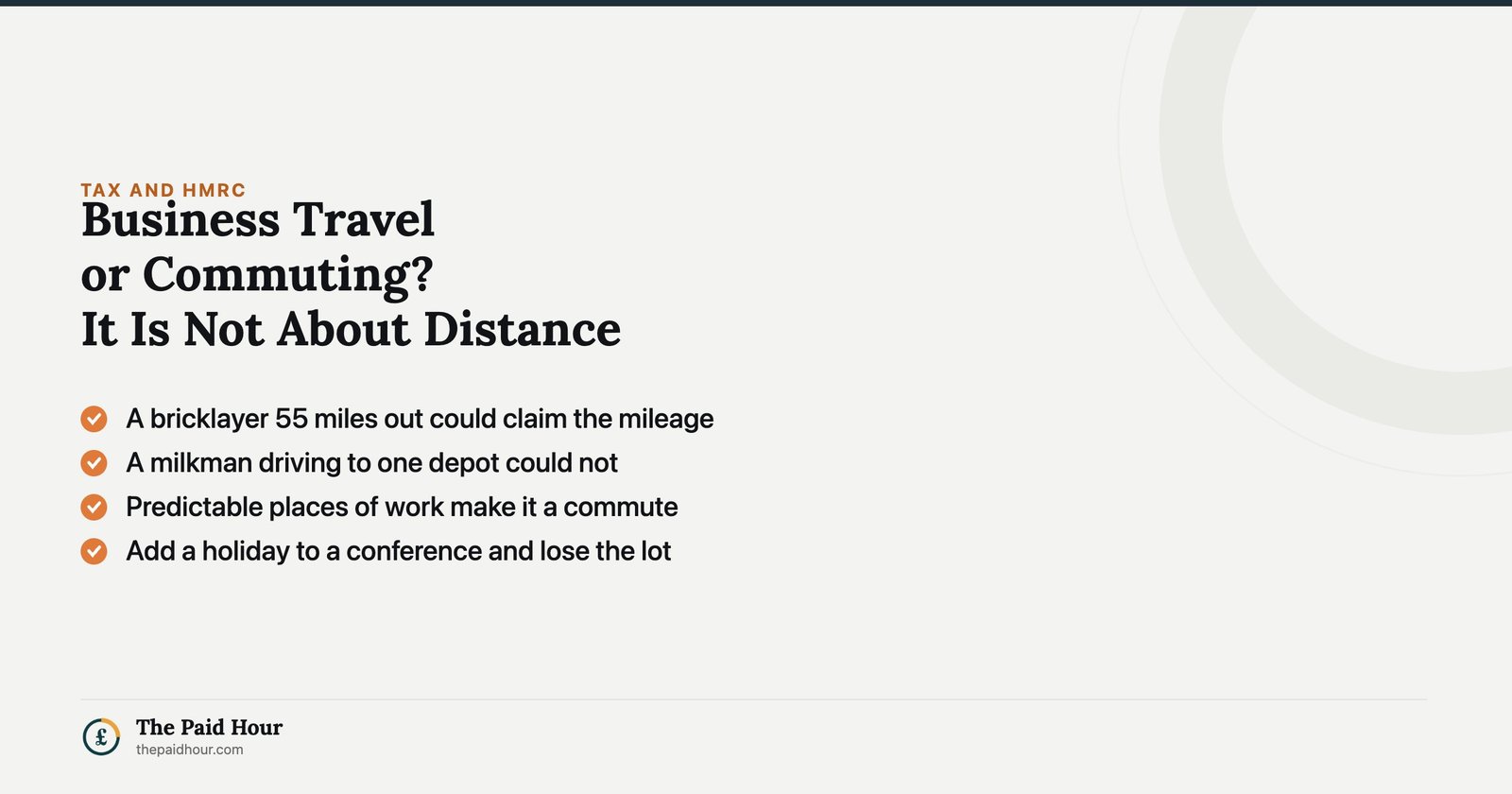
A bricklayer 55 miles from home could claim. A milkman driving to one depot could not. HMRC tests how predictable your places of work are, not how far.
Started working for yourself in 2025/26? Register for Self Assessment by Monday 5 October.New to self-employment in 2025/26? Register with HMRC by 5 October. See what to do
Fifty-odd guides sit under this heading. They answer four questions, in this order.
Do I have to file at all? Whether you need to send a return and what the £1,000 trading allowance actually covers settle it for most people. Side income from a platform has its own wrinkle: Vinted, eBay and Etsy now report sellers to HMRC, and the line between a hobby and a business is not about how you describe it.
How do I file it? Filing your first Self Assessment, step by step is the sequence, including the 5 October registration deadline that catches people four months before they think about tax. Your UTR arrives by post around fifteen days after you register, so the order matters. Which return you are filing and when it is due, and if you miss it, what the penalties actually come to.
What do I owe, and what can I take off? Income tax bands for 2026/27, National Insurance, and how much to set aside as you go. On the other side: allowable expenses, the ones that are not allowable, simplified flat rates and capital allowances. If the bill is over £1,000, payments on account add half again — and you can reduce them when the year is going to be worse.
What is changing? Making Tax Digital for Income Tax is the big one, with quarterly deadlines and a points-based penalty system that works nothing like the old one. And if you cannot pay, Time to Pay exists and works better before the deadline than after.
Every figure on these pages links to its HMRC source and carries the date it was checked. General information, not tax advice.
A bricklayer 55 miles from home could claim. A milkman driving to one depot could not. HMRC tests how predictable your places of work are, not how far.
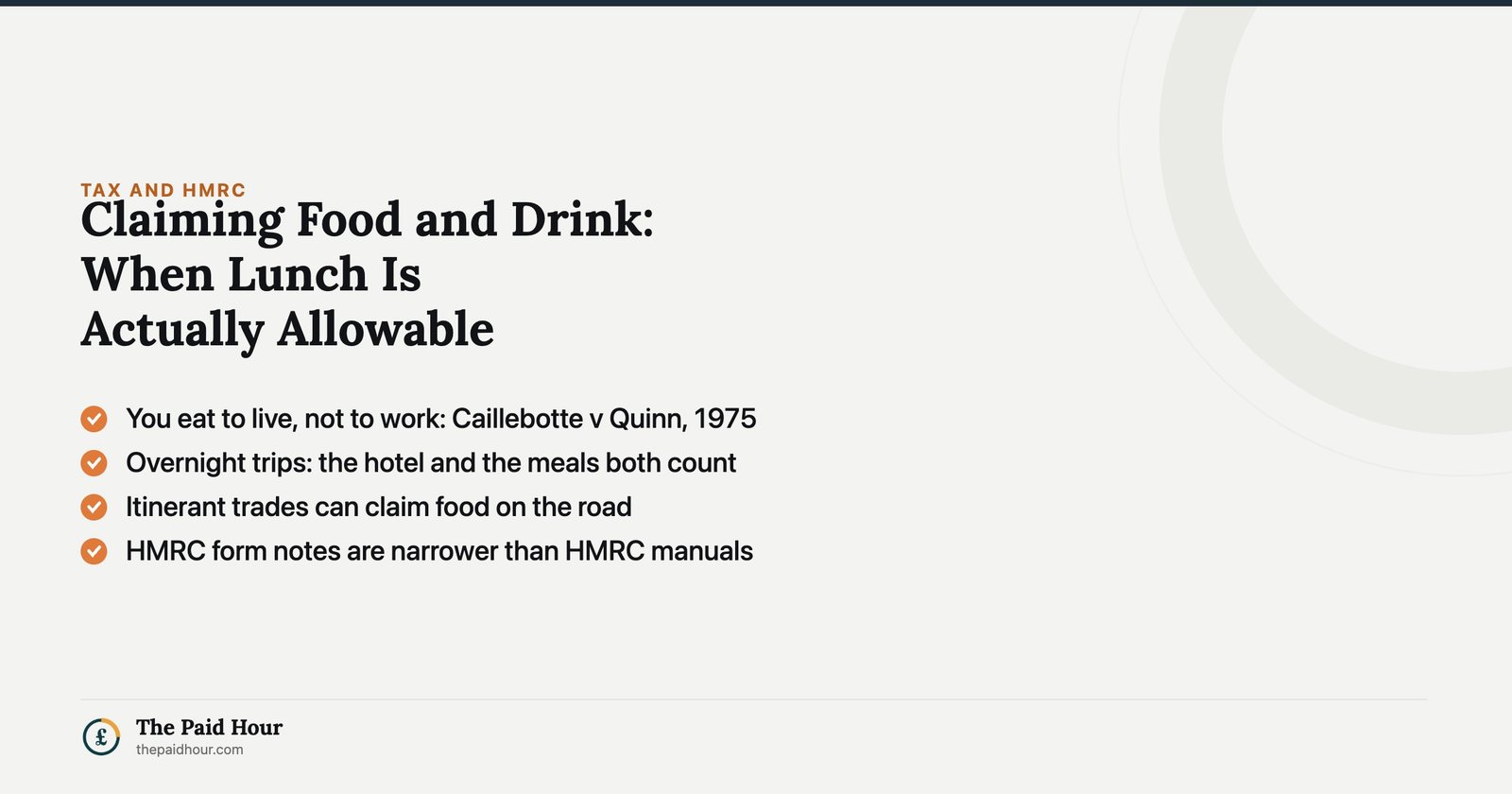
You eat to live, not to work, so everyday lunches fail. HMRC does allow food on overnight trips, for itinerant trades, and on journeys outside your pattern.
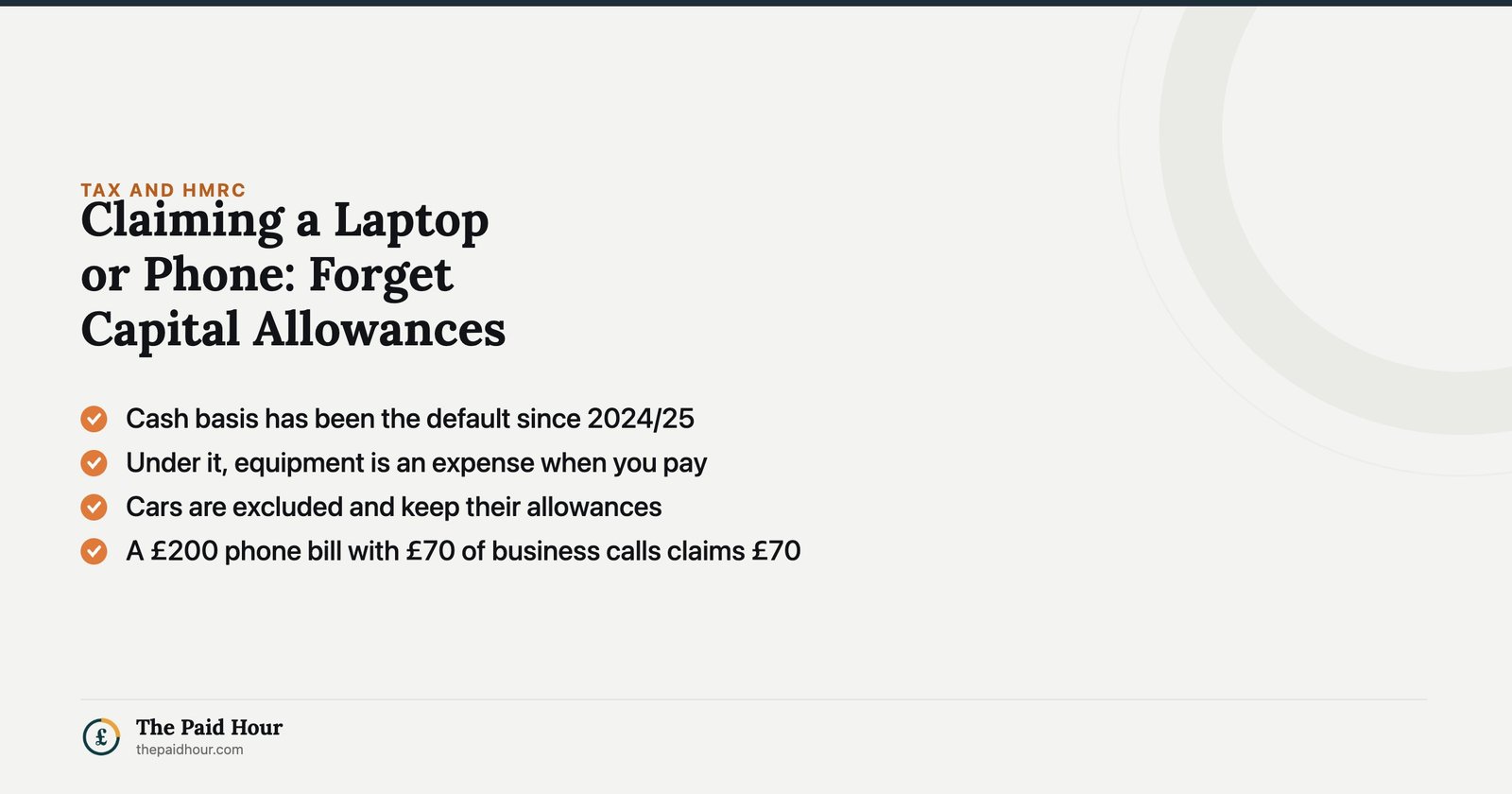
Cash basis has been the default since 2024/25, and under it equipment is just an expense when you pay for it. Cars are the exception; phones split by use.
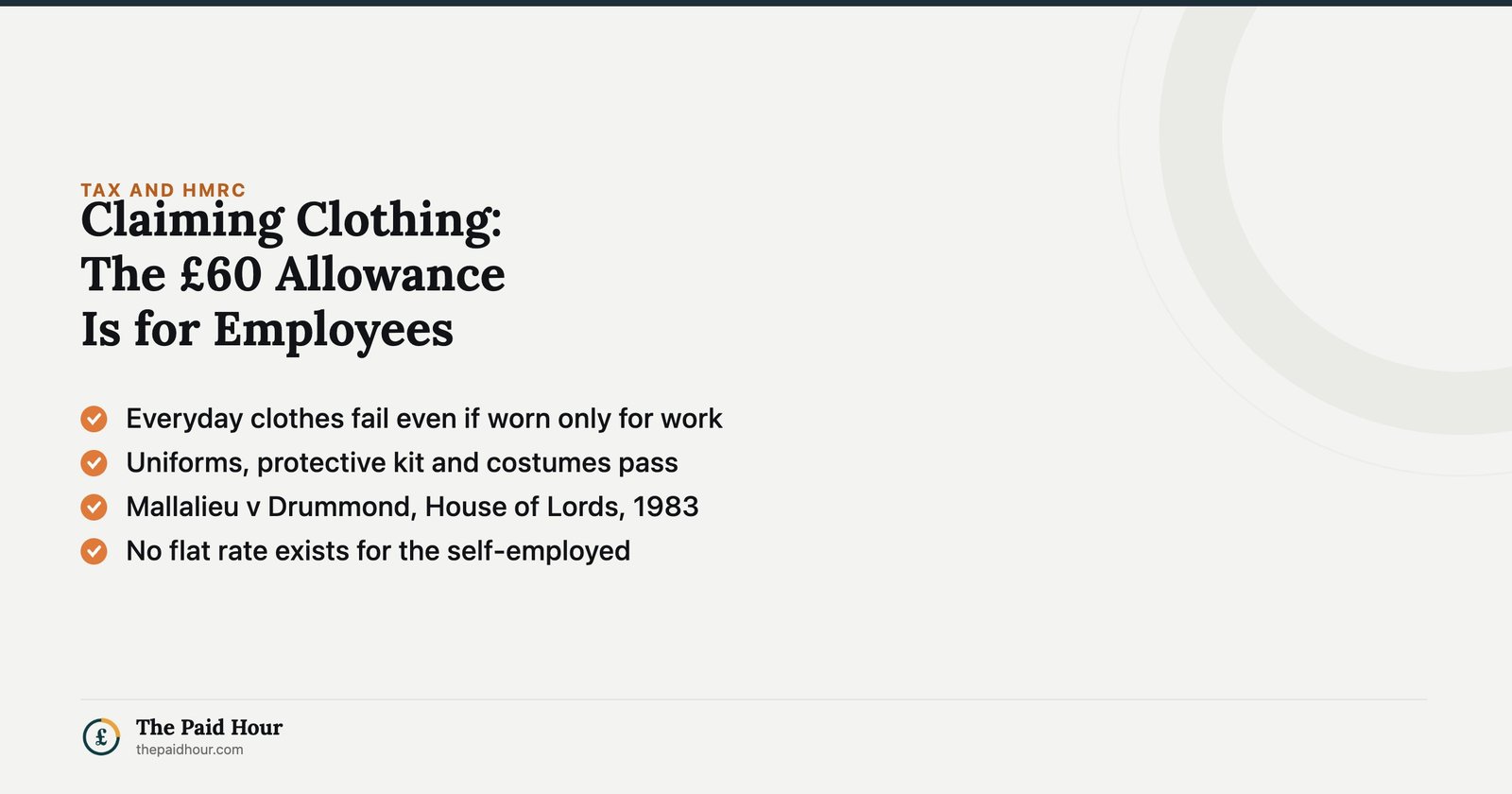
HMRC allows uniforms, protective clothing and costumes. Everyday clothes fail even if you only wear them for work, and the £60 flat rate is employees only.
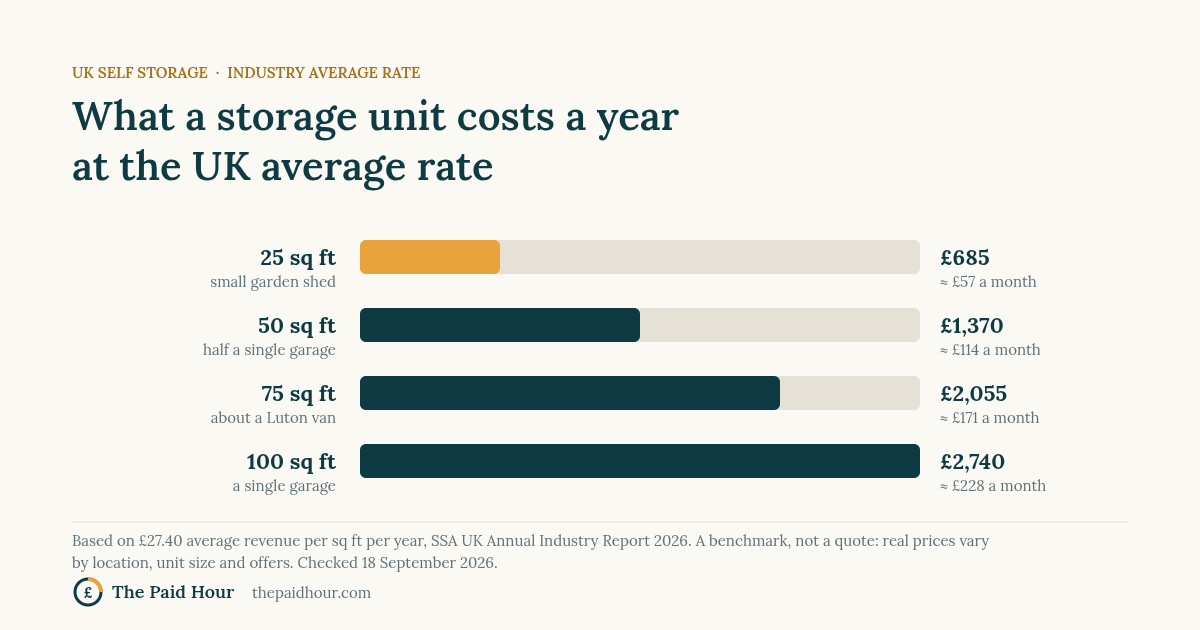
Self storage rent for stock or tools is an allowable expense. What a unit costs at the UK average rate, the VAT catch, and how to claim it on your return.
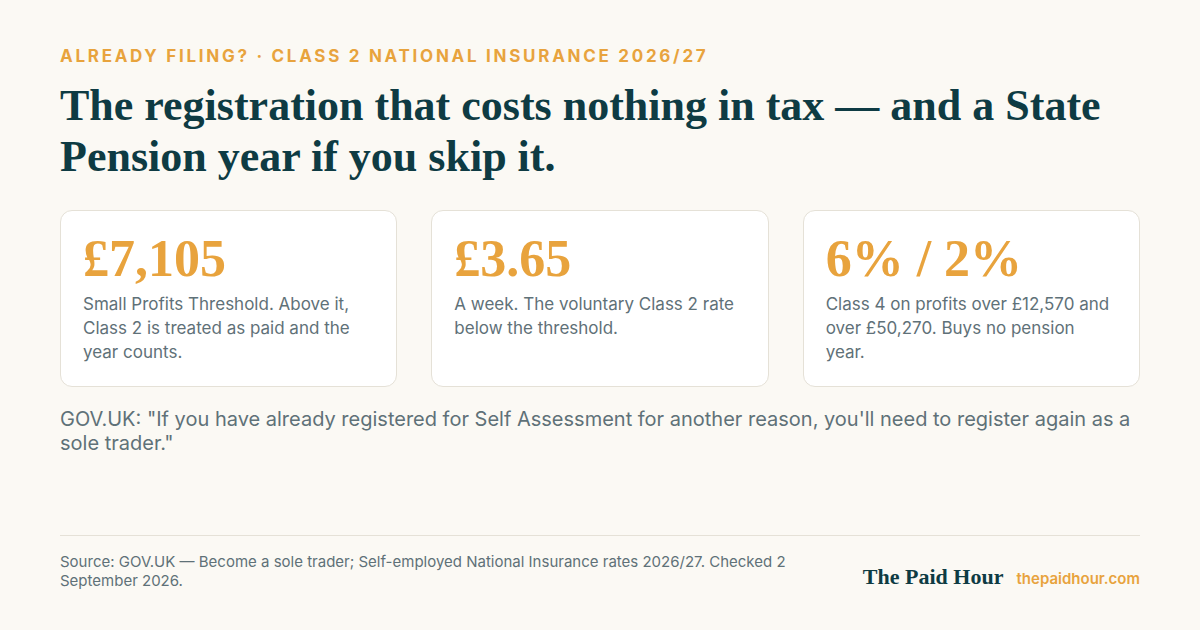
Already have a UTR? A new self-employment still needs its own registration by 5 October 2026 — and skipping it quietly costs you National Insurance years, not tax.
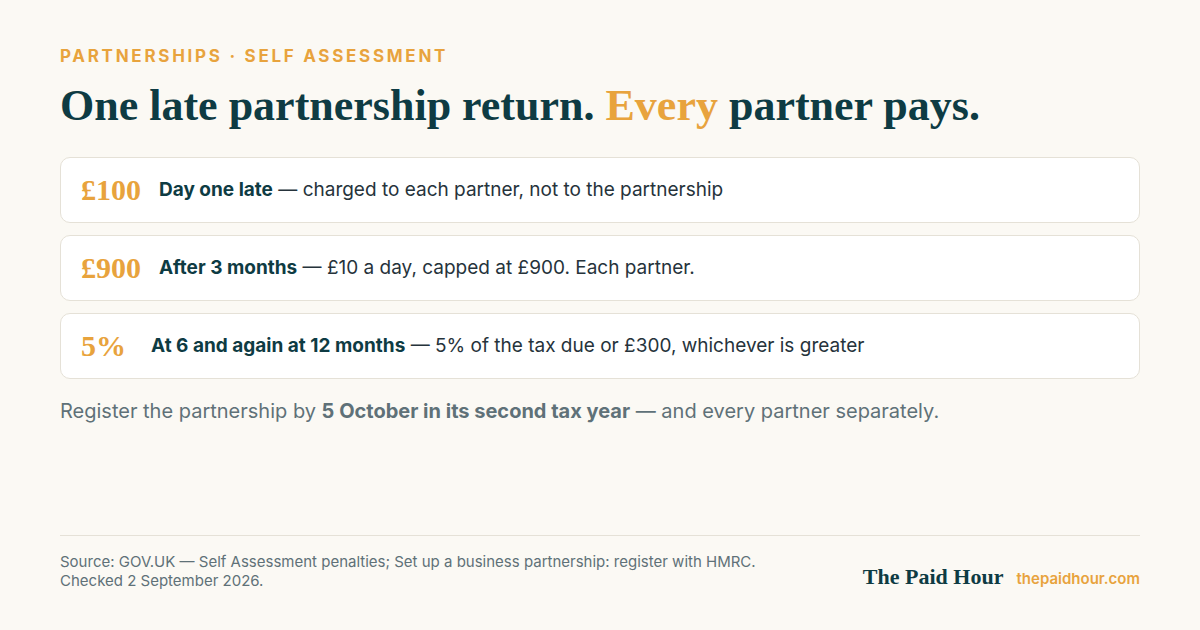
A UK partnership needs two registrations, and the deadline falls in its second tax year. Miss the return and HMRC charges every partner, not just the one who files.
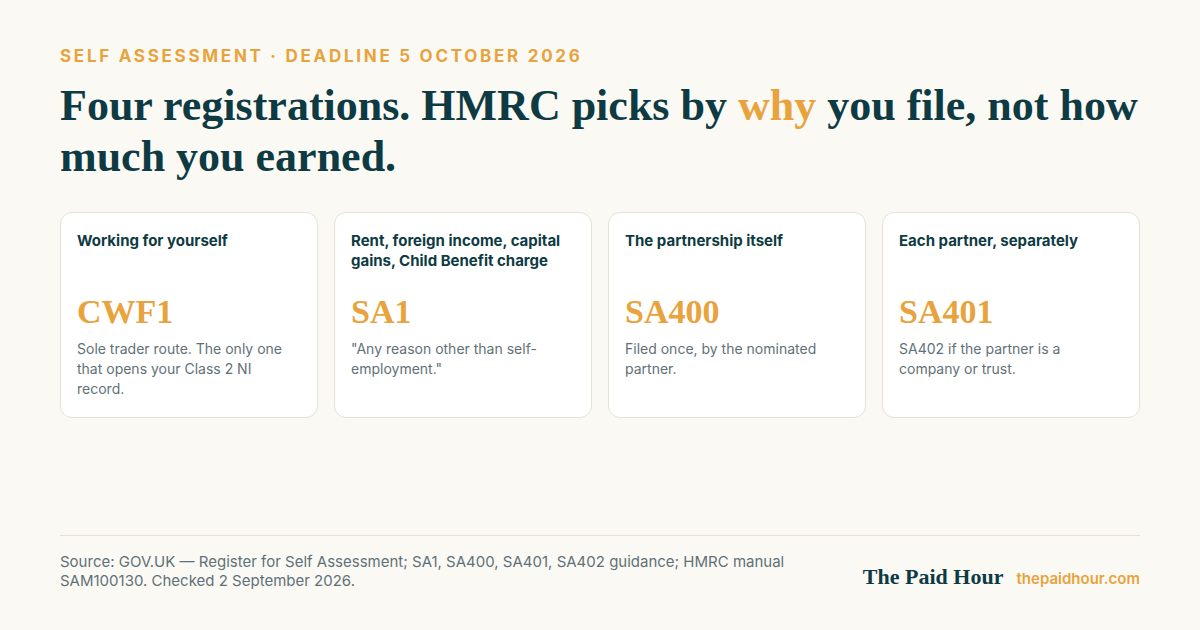
Registering for Self Assessment before 5 October 2026? Sole traders, landlords and partners each use a different HMRC route. Here is which one applies to you.

UK rules do not let you pick which coin you sold. How the same-day rule, the 30-day rule and the Section 104 pool combine — with a worked example.
A crypto loss only counts if you tell HMRC within four years of the tax year you disposed of it. The offset order, and when a dead token can still be claimed.
Mined crypto is taxed twice: on its value when the reward lands, and on any gain when you sell. Where the £1,000 allowance fits, and when HMRC calls it a trade.
How long HMRC has to open an enquiry into your return — 12 months, then 4, 6 or 20 years. What triggers an HMRC enquiry, and what to do if one arrives.