
Statutory Demand: Free to Send, £2,952 to Follow Through
Free to send, £750 against a company and £5,000 against a sole trader. What a statutory demand really does, and when not to send one.
Started working for yourself in 2025/26? Register for Self Assessment by Monday 5 October.New to self-employment in 2025/26? Register with HMRC by 5 October. See what to do
An invoice is the document that starts a payment clock, and most of what goes wrong with getting paid is decided before it is sent.
Start with what the law asks for. What a UK invoice must legally include walks through the nine elements GOV.UK requires and where each one sits on the page; if you are VAT registered, a VAT invoice has to carry more. Neither takes long to get right. A vague line description is what gives a slow payer somewhere to hide.
Still choosing a tool? The invoicing software comparison weighs the dedicated apps against full accounting software, and the FreshBooks review covers what a US-built tool actually costs a UK sole trader.
Then the part nobody enjoys. Unless you agree a date, the customer has 30 days from receiving the invoice or the work, whichever came first. After that the debt is late, and statutory interest of 8% above the Bank of England base rate — 11.75% today — plus £40 to £100 per invoice applies automatically, whether you ask for it or not. The chasing playbook sets out the order to do things in. There is also an outside limit: six years under the Limitation Act 1980, after which the debt cannot be enforced at all.
Money that arrives in stages needs its own paperwork. A deposit is a payment like any other and gets its own invoice with its own number — and if you are VAT registered, it creates a tax point the day it lands, refundable or not. A client who pays the same amount every month is a different arrangement again, with a numbering trap that catches people on recurring invoices. And if any of it is coming by card, the processor’s cut is not something you can add to a consumer’s invoice — surcharging a consumer for a normal card has been unlawful since 2018.
One change is coming. The Commercial Payments Bill would cap commercial payment terms at 60 days and stop a contract overriding your right to statutory interest. It is not law yet — here is what it changes and where it has got to.
Figures checked 26 August 2026.
Free to send, £750 against a company and £5,000 against a sole trader. What a statutory demand really does, and when not to send one.
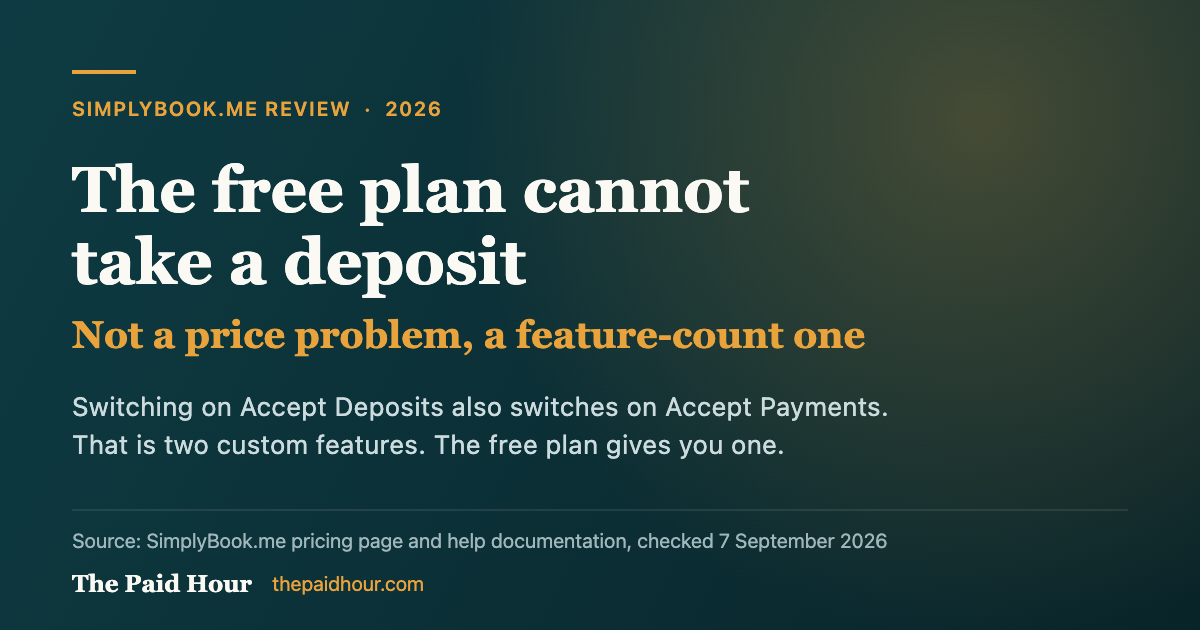
SimplyBook.me’s cancellation policy does not charge a no-show. Deposits do, and they need the Basic plan. What it really costs a UK mobile beauty business.
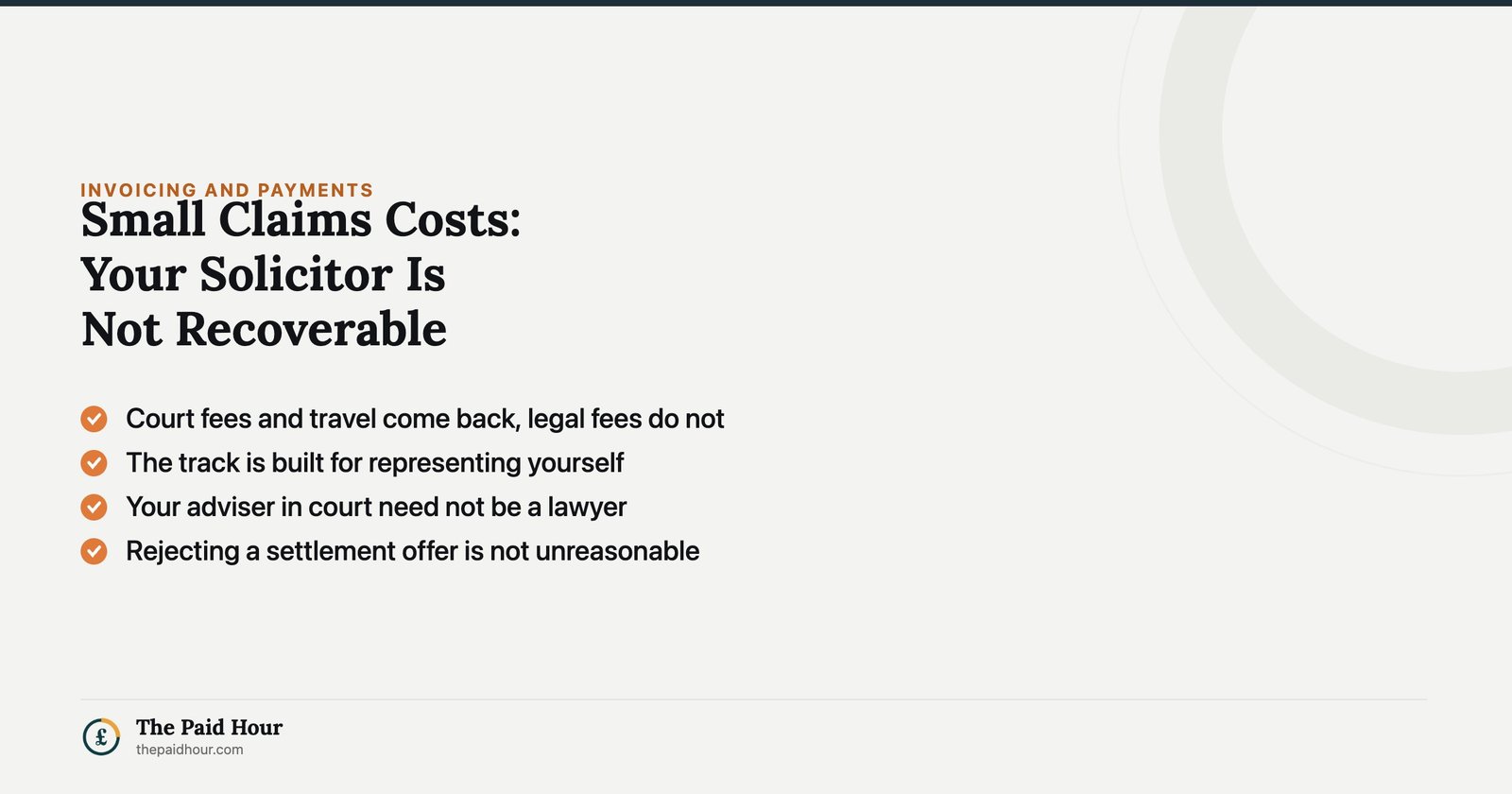
You can hire a solicitor for a small claim and never recover the fee, whatever the outcome. Rule 27.14 is built for people representing themselves.
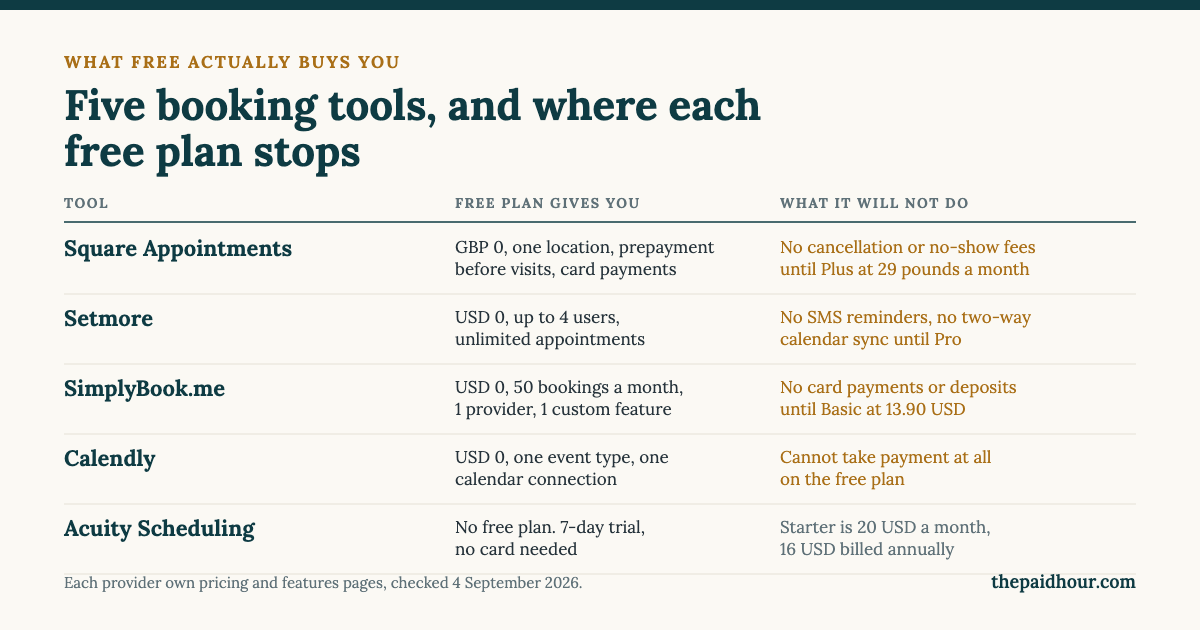
Square, Setmore, SimplyBook.me, Calendly and Acuity compared for UK sole traders: what each free plan really gives you, and the cheapest way to charge for a no-show.
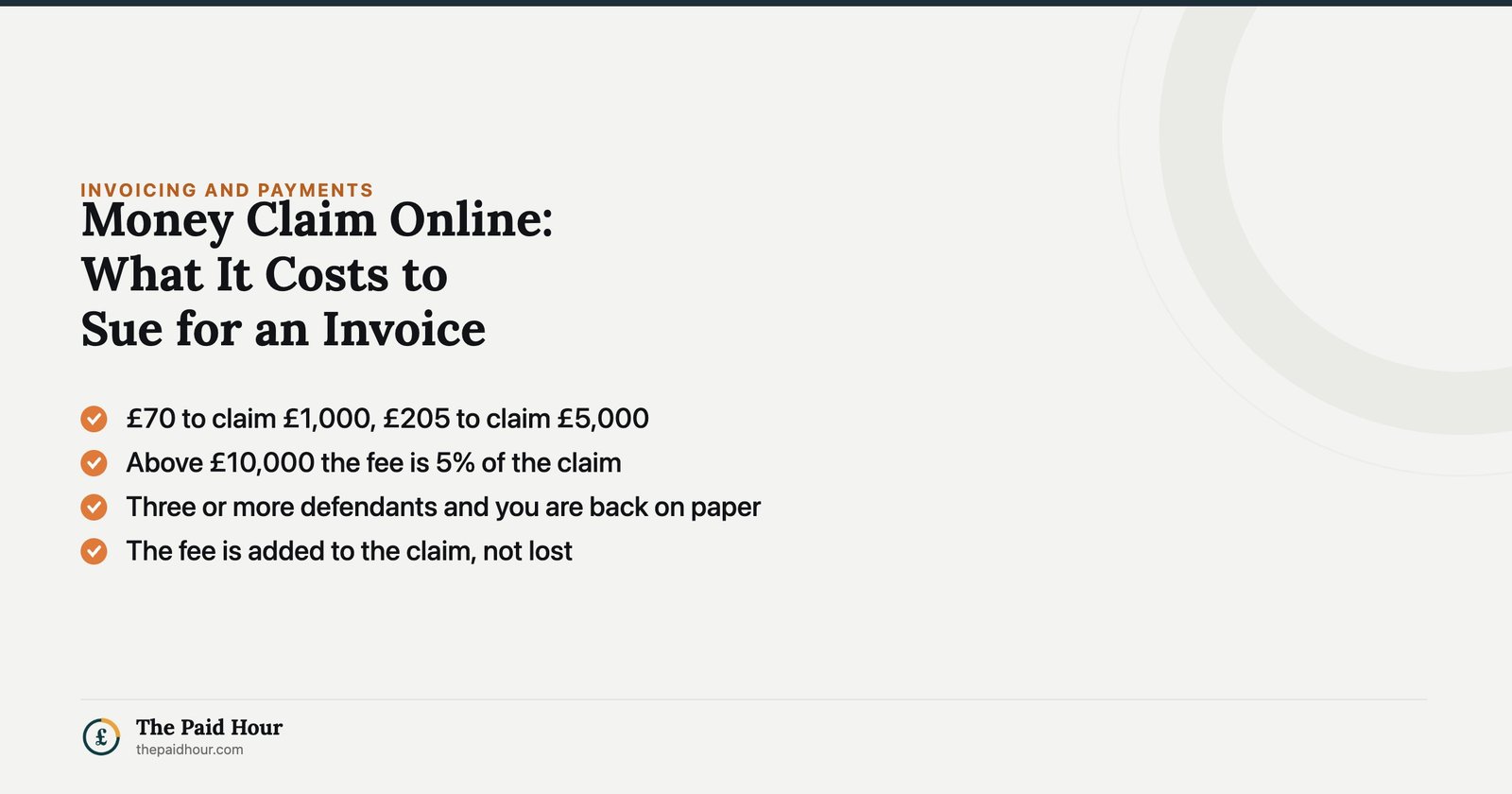
£70 to claim £1,000, £205 to claim £5,000, then 5% of the claim above £10,000. The fee is added to what you claim, not lost. But a judgment is not money.
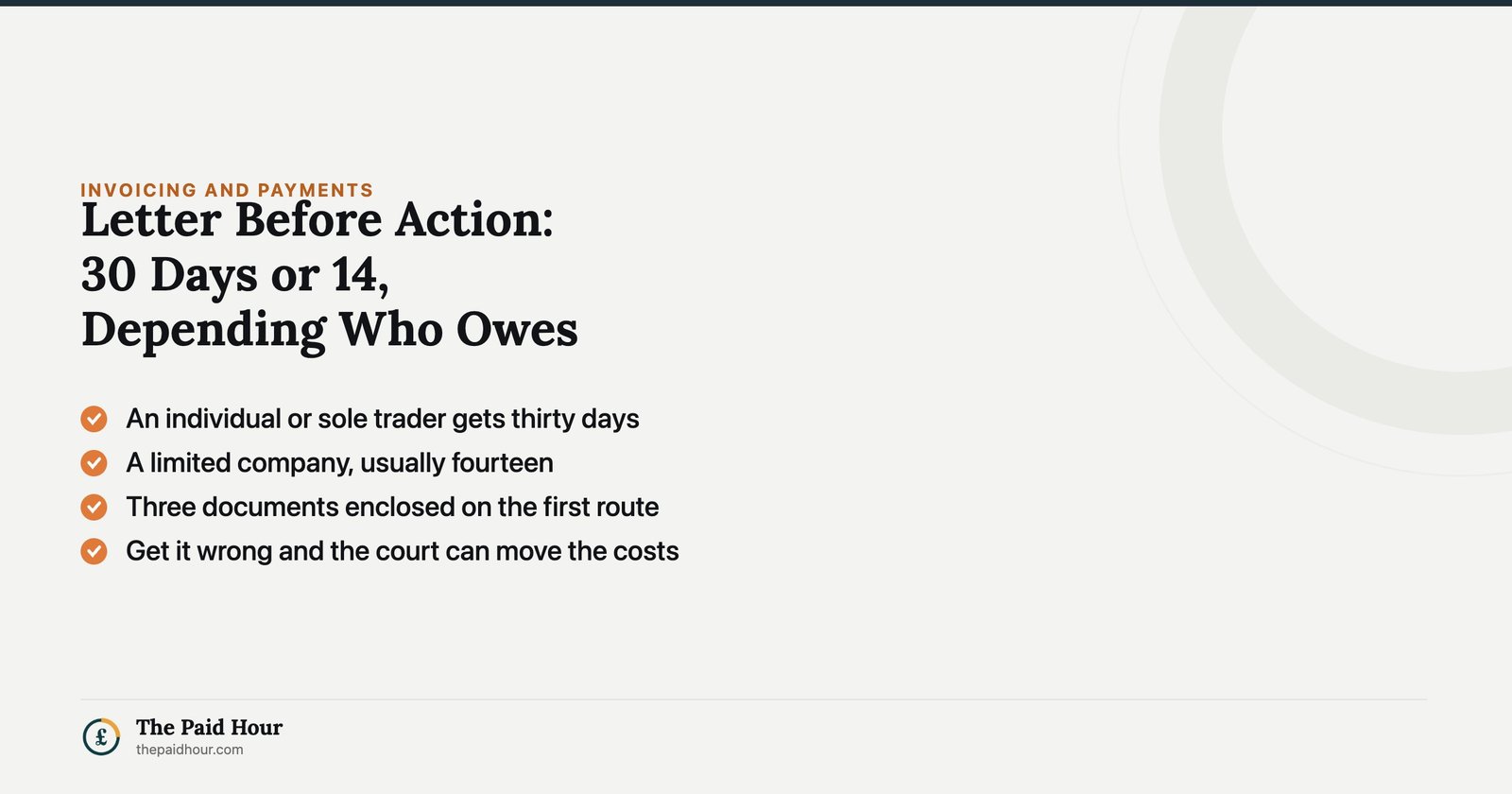
If your client is an individual or sole trader, the debt protocol gives them 30 days and three enclosures. If it is a limited company, 14 is usually enough.
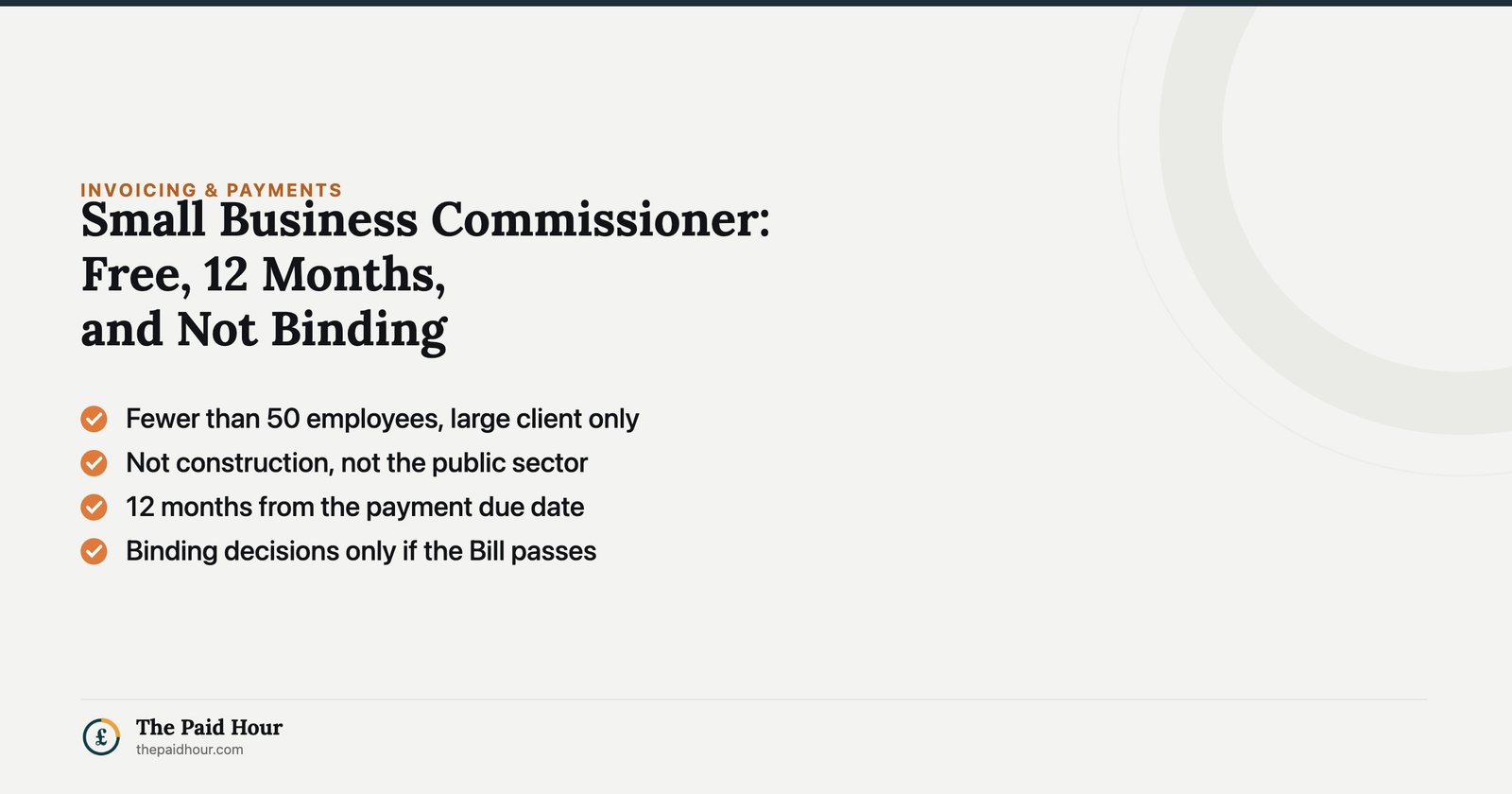
The Small Business Commissioner is free and needs no lawyer, but cannot order anyone to pay. Five filters, a 12-month limit, and what the new Bill changes.
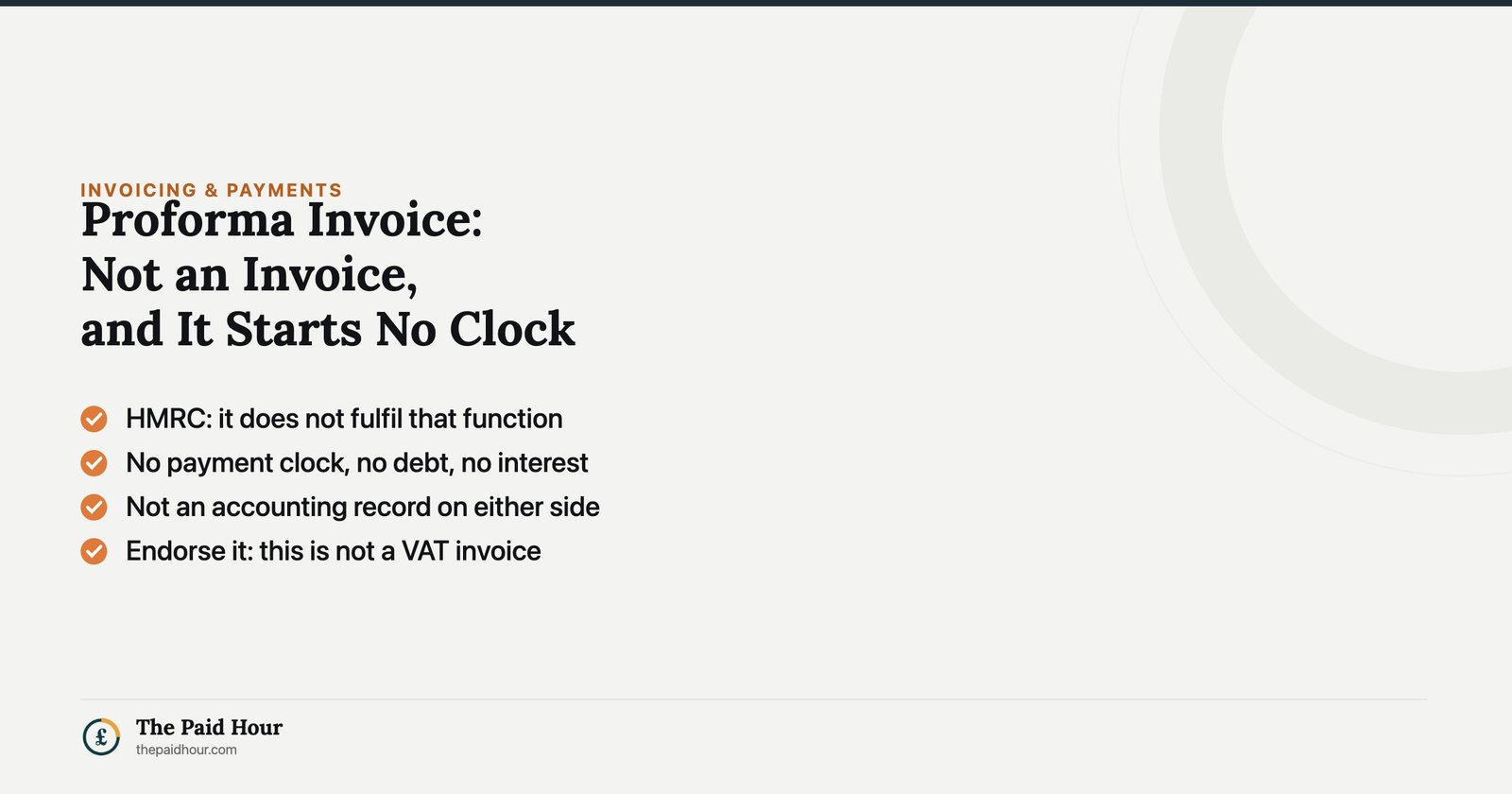
A proforma invoice is not an invoice — HMRC’s own manual says so. It starts no payment clock, is not a bookkeeping record, and no VAT can be reclaimed on it.
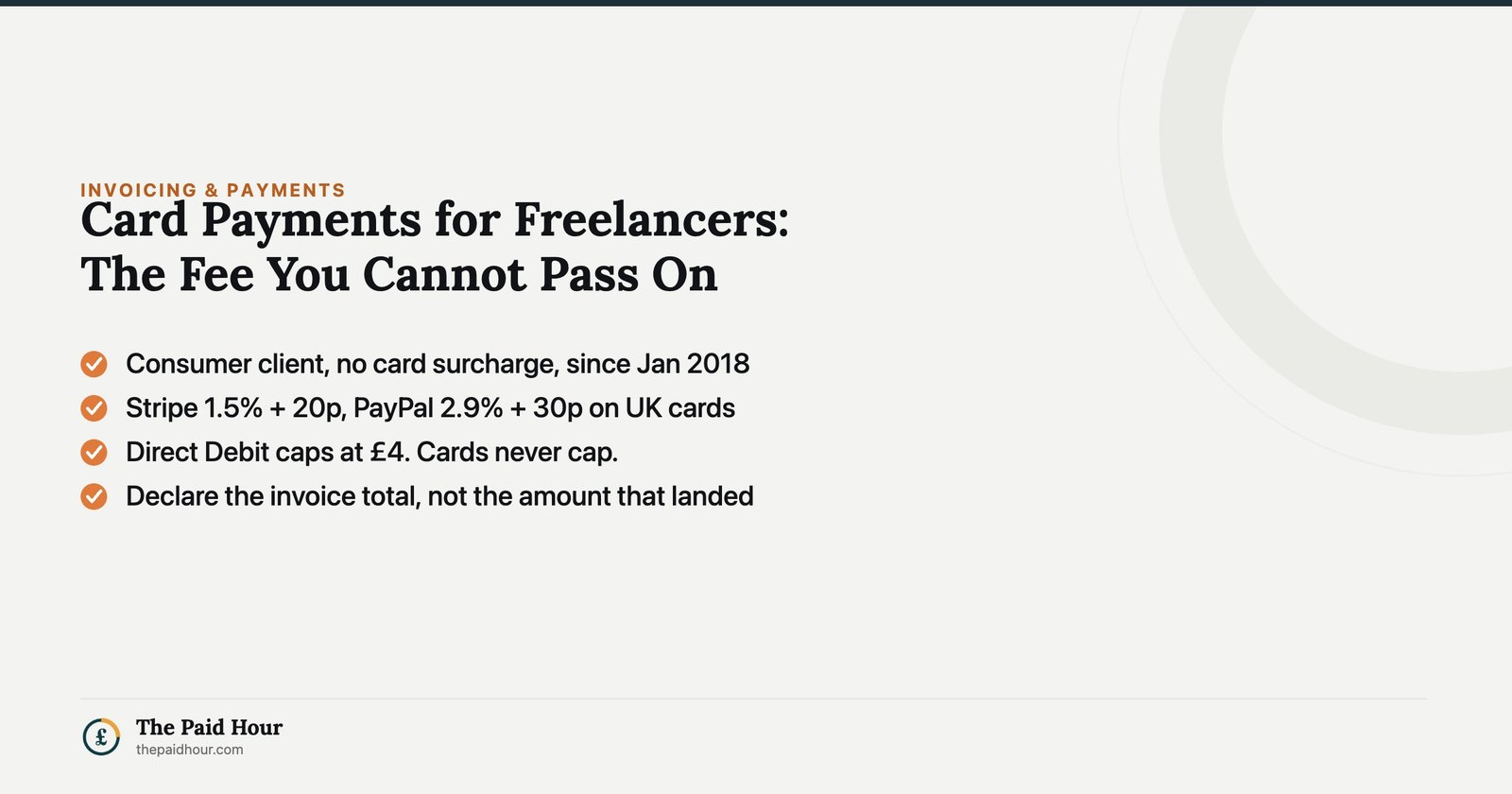
Card payments cost 1.5% + 20p with Stripe and 2.9% + 30p with PayPal; Direct Debit is capped at £4. And you cannot surcharge a consumer client.
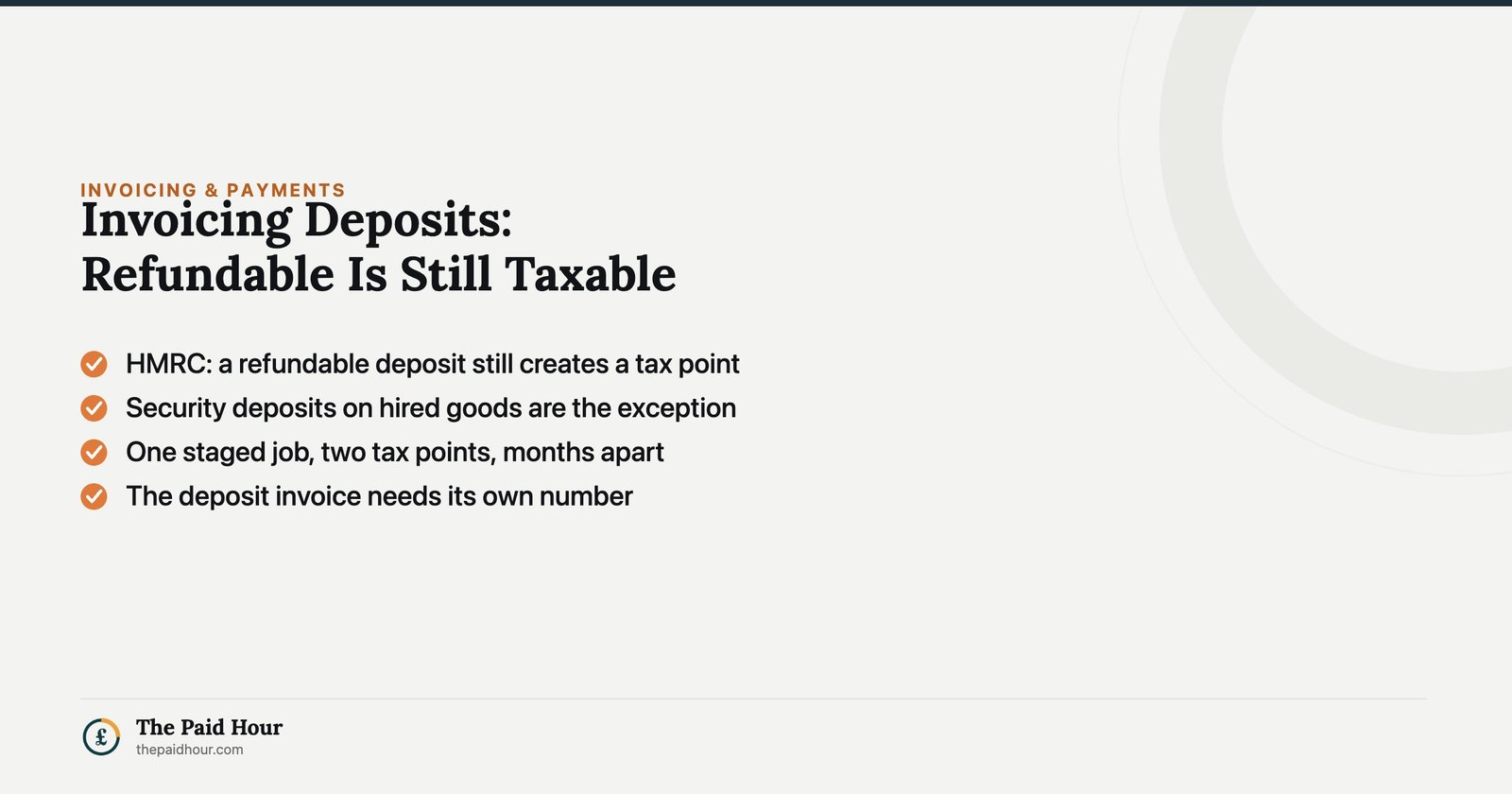
Invoicing deposits: a refundable one still creates a VAT tax point the day it lands — HMRC says so outright. What goes on the invoice, and when it counts.
Recurring invoices for retainers: still one invoice per period, with its own number. How to automate the schedule and avoid the numbering trap.
There is a real cut-off after which an unpaid invoice becomes legally uncollectable. What the Limitation Act 1980 means for freelancers chasing old debts.