
How to Register for VAT as a UK Sole Trader (Step-by-Step)
A step-by-step guide to registering for VAT as a UK sole trader or freelancer — what you need, how to apply, and what happens while you wait.
Started working for yourself in 2025/26? Register for Self Assessment by Monday 5 October.New to self-employment in 2025/26? Register with HMRC by 5 October. See what to do

Founder and Editor
Syed Esrak Ahmmed started The Paid Hour in August 2026 and writes every guide on it. He works in web design, SEO and digital operations, and built the site after finding that most UK freelancing advice either stops at the obvious or quietly sells something. He is based in Cambridge, England.
Not an accountant and not a tax adviser. Every figure on this site is checked against HMRC's published guidance or a provider's own documentation, and carries the date it was last verified.
Elsewhere: LinkedIn/ Personal site/ YouTube
Guides written by Syed
A step-by-step guide to registering for VAT as a UK sole trader or freelancer — what you need, how to apply, and what happens while you wait.
Budgeting on irregular freelance income: MoneyHelper’s baseline method plus a practical buffer framework for UK sole traders.
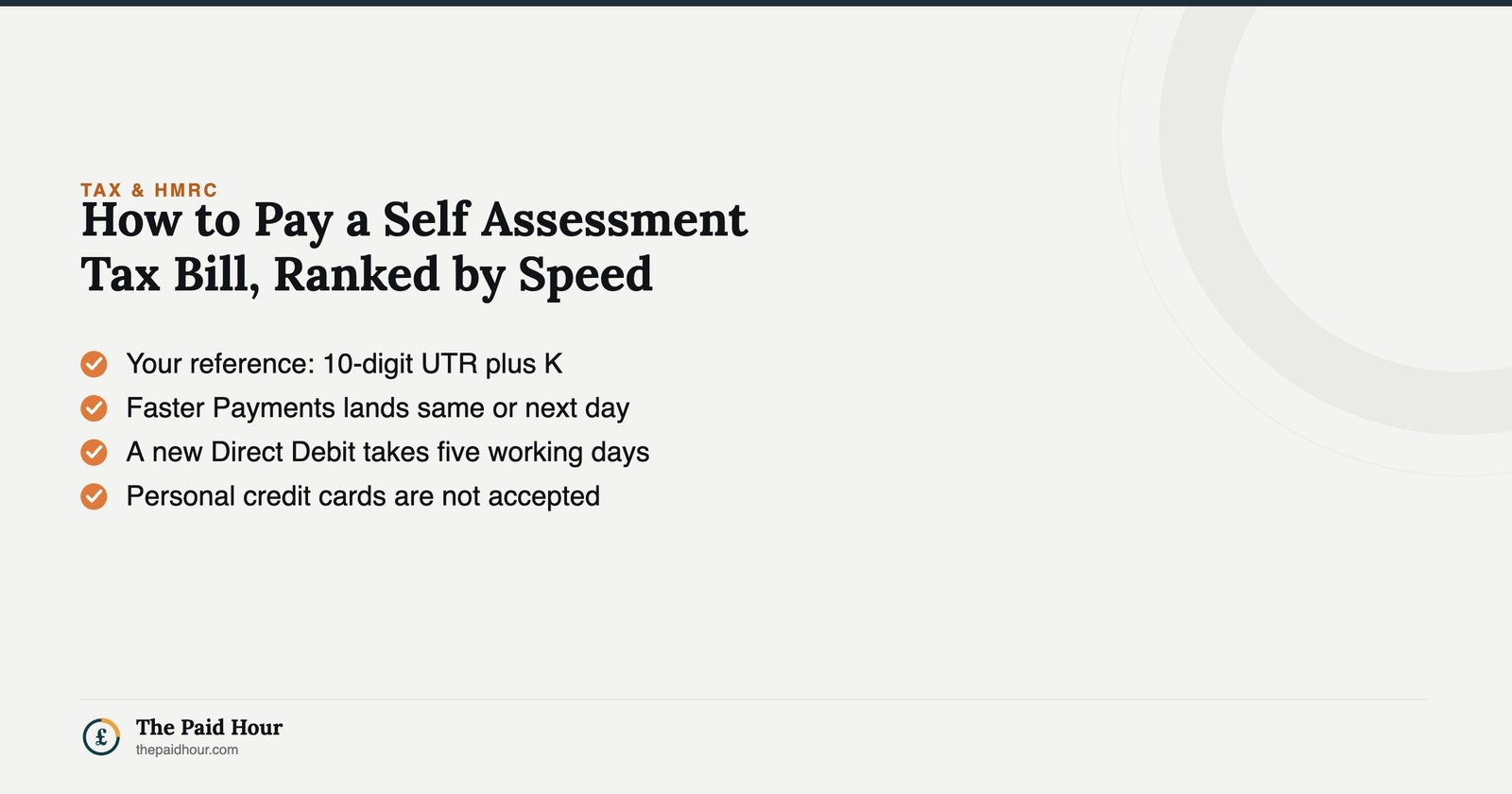
Paying a Self Assessment tax bill: Faster Payments and debit card reach HMRC same or next day, a new Direct Debit takes five working days. Every method timed.
Selling online or freelancing casually? Here’s HMRC’s actual “badges of trade” test for whether an activity counts as trading at all.
How much to save for tax when self-employed: no HMRC rule says 25–30%. Real 2026/27 numbers — 15.1% at £30,000 profit, 23.1% at £60,000.
What should a UK freelance contract include? A practical checklist covering scope, payment, IP ownership, and notice clauses.
Day rate vs fixed price freelance work compared — which pricing model suits which project, and how scope creep hits each one differently.
Employed and self-employed at once? Here’s exactly how PAYE and Self Assessment combine for tax and National Insurance in the UK.
No law requires a business bank account — but your bank probably does. Santander and Barclays both say a personal account for business breaches their terms.
Confused about Class 2 vs Class 4 National Insurance? Here’s who actually pays each one in 2026/27, and why Class 2 rarely means a bill anymore.
Disallowable expenses for self-employed sole traders: client entertainment, fines, ordinary clothing, and mixed-use costs HMRC won’t let you claim.
A step-by-step playbook for chasing unpaid invoices in the UK — reminder timing, adding statutory interest, formal notices, and small claims court.