
What matters here: Simply Business is a broker rather than an insurer, one form, quotes from multiple insurers, one policy at the end. The advertised “from” prices are annual figures for the cheapest slice of customers, divided by twelve. Configure a real policy for your own trade before trusting any headline number.
Table of Contents
Insurance is easy to put off as a sole trader. There’s no single moment that forces the decision the way a tax deadline does. This Simply Business sole trader insurance guide covers how the platform actually works, which cover types matter for freelance work, and what the advertised pricing really means once you configure a real policy.
Insurance is easy to put off as a sole trader, there’s no single moment that forces the decision the way a VAT threshold or a filing deadline does. But a single claim, especially a professional indemnity or public liability claim, can cost far more than years of premiums would have. Simply Business is one of the larger UK platforms for comparing sole trader cover, so it’s worth understanding how it works before you compare it against anything else.
What it isn’t: it’s not an insurer
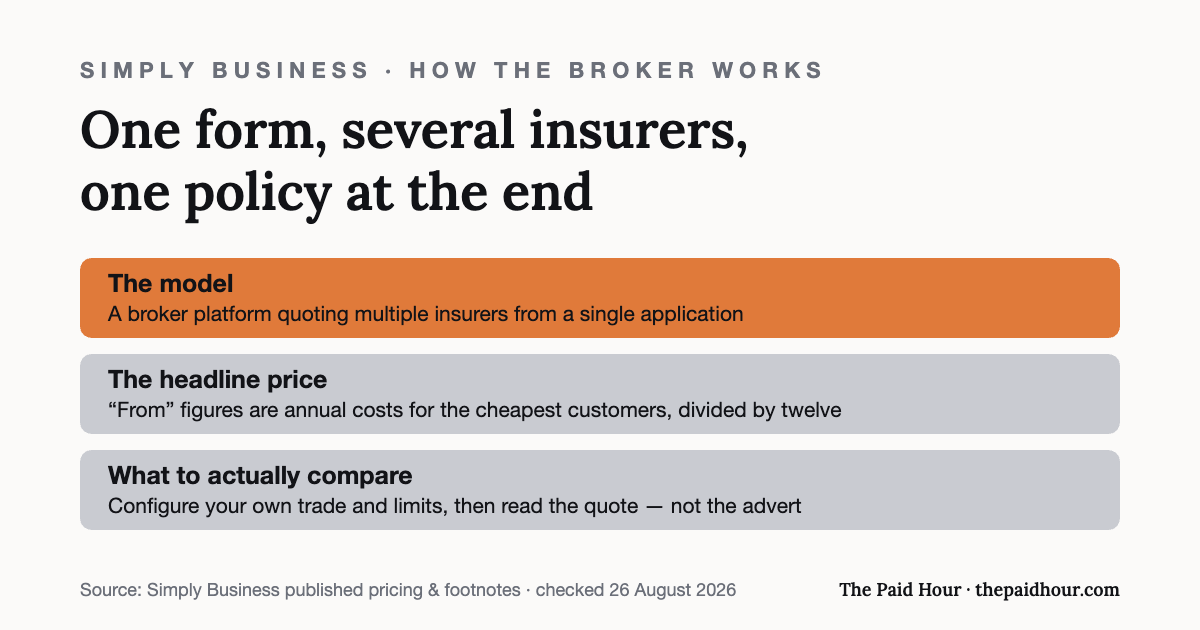
This is the detail worth understanding first. Simply Business is a broker and comparison platform rather than an insurance underwriter itself. When you buy a policy through them, you’re buying from one of the insurers on their panel: the site lists names including Allianz, AIG, Axa, Churchill, Covea, Hiscox, and Zurich. Simply Business’s role is finding and presenting the right policy from that panel, customising it to what you actually need, and handling the purchase online instead of through a traditional phone-based broker.
What cover is available
For sole traders specifically, the types of cover available through the platform include:
- Public liability insurance: covers claims if your work causes injury or property damage to someone else
- Professional indemnity insurance: covers claims arising from mistakes or negligent advice in your professional work
- Employers’ liability insurance: legally required the moment you take on staff, even part-time
- Contents and equipment insurance: covers business equipment and fixtures
- Tools insurance: covers loss, theft, or damage to trade tools specifically
- Stock insurance and building insurance: for anyone holding stock or operating from owned/leased premises
- Legal expenses insurance: covers legal costs arising from business disputes
You can select only the cover types relevant to your work rather than buying a fixed bundle, which matters for sole traders whose risk profile is different from a bricks-and-mortar retailer’s.
What it costs
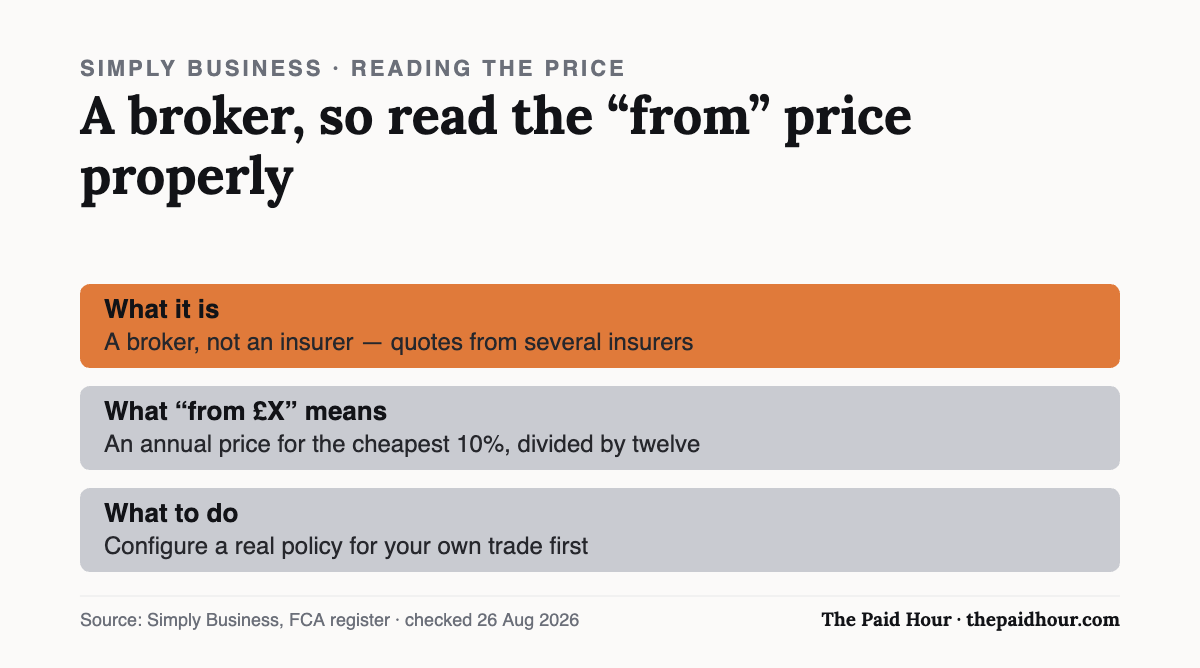
Simply Business advertises sole trader insurance quotes from £5.36 a month, for £2 million of public liability cover. Worth reading that figure correctly: it’s described as representing the lowest 10% of pricing seen on the platform, not a typical or guaranteed price — your actual quote depends on your trade, claims history, and the specific cover you select. Treat the headline figure as a floor rather than an expectation. Current example quotes and the full insurer panel are published at simplybusiness.co.uk.
Which cover matters for a freelancer
This depends heavily on what you do. A freelance consultant or designer whose main risk is a client claiming bad advice or a missed deadline caused them financial loss is far more exposed on professional indemnity than public liability. A tradesperson working in clients’ homes has the inverse priority, public liability matters more, alongside tools cover. There’s no single answer that fits every sole trader on this site, which is exactly why a comparison platform with selectable cover types is more useful here than a single fixed insurance product.
A note on this being regulated territory
Insurance is a regulated product, and the right policy and level of cover depends on your specific trade, contracts, and risk exposure in ways a general guide can’t fully assess. This article is educational instead of personalised advice, if you’re unsure what cover your specific work needs, it’s worth speaking to a broker or adviser directly about your situation rather than relying solely on a generic comparison.
The honest Simply Business verdict
What this means of this Simply Business sole trader insurance guide: Simply Business is a reasonable starting point for comparing sole trader insurance without committing to a single insurer upfront, and the ability to pick individual cover types rather than a fixed bundle suits the wide range of work freelancers do. The £5.36 headline price is a floor, not a typical quote, go in expecting your real number to depend on your specific trade and risk.
One line on a broker’s shortlist is not a commercial decision at all. Employers’ liability insurance is required by law the moment you employ anyone, the minimum cover is £5 million, and the penalty for going without runs at £2,500 for every day you are uninsured. Everything else Simply Business quotes you (public liability, professional indemnity, contents), is a judgement about risk instead of a legal duty.
That is worth separating in your head before you compare quotes, because a broker’s job is to sell you a policy and the law only insists on one of them.
Is your name, your work and your downside actually covered?
Protect the Business: Legal, IP & Insurance 2026/27. Eight modules and five working sheets built around a complete annotated freelance contract, with a negotiation note under every clause.
- Registering a trade mark yourself: searching, classes, fees and the opposition period
- UK GDPR without a consultant: the ICO fee tiers, a privacy notice, and the 72-hour breach plan
- An insurance sizing calculator by work type, and the client clauses never to sign as they stand, with the redline for each
You own the copyright in what you make until you assign it in writing. Most clients assume the opposite, and most freelance contracts are silent on it.
Buying more than one? All ten 2026/27 courses for £107, against £328 at full price.
How this review was put together. This is a documentation-based review. The figures come from Simply Business’s own published pricing and help pages and, where relevant, HMRC’s software lists, checked on the date shown at the end of the article. It does not rest on a paid account or on running the product with live client data, and where a point comes from the provider’s marketing rather than something independently checkable, the text says so.
Read next
- Public Liability Insurance: Do the Self-Employed Need It?
- Professional Indemnity Insurance: What Sole Traders Miss
- Self-Employed Insurance UK: What Freelancers Actually Need
Sources
Reviewed 26 August 2026; policy pricing is quote-based and the linked insurer pages are the source. The Paid Hour is not FCA-authorised, does not arrange or recommend insurance, and earns nothing from any insurer named here. Prices are the insurer’s own published figures, get your own quote for your own trade. This is general information, not advice.