
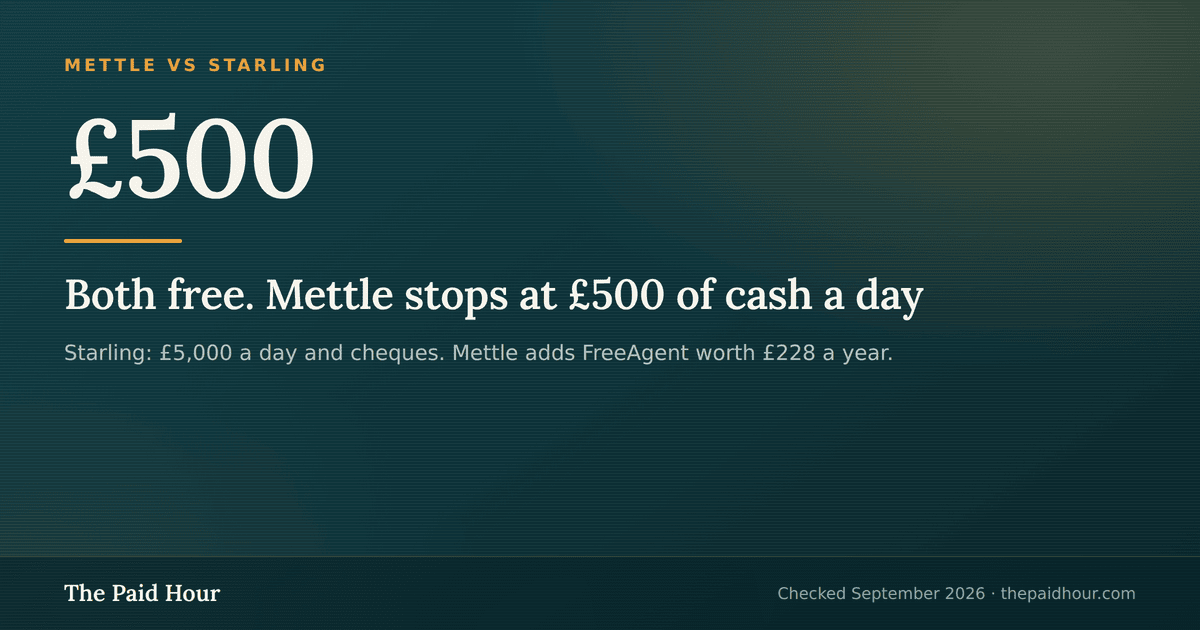
The short version: Neither account has a monthly fee (checked 11 September 2026). Mettle, a NatWest brand, includes FreeAgent (normally £19 a month ex VAT) if you make one transaction a month, but caps cash at £500 a day, charges £2.75 a deposit and takes no cheques. Starling takes cash at 0.7% (£3 minimum) up to £5,000 a day, cheques free. CMA August 2026 service scores: Starling 83%, Mettle 82%.
The Mettle vs Starling choice usually gets decided on the wrong thing. People compare the apps, both of which are fine, and miss the three lines of small print that cost real money: whether you ever get paid in cash or by cheque, whether you want FreeAgent, and whether you already bank with NatWest. Get those three right and the rest is taste.
This verdict rests on each provider’s published terms, fee documents and help articles, not on months of use. Every figure below is dated and linked. I re-checked all of them on 11 September 2026, including the Mettle help centre pages that the main marketing site doesn’t link to.
What each account costs a sole trader
Nothing, on the headline. Mettle’s fee information document lists “Maintaining the account: No fee”. Starling’s sole trader account page says “no monthly fees” and its business page adds “No fees on UK payments, in or out”. So far, identical.
The paid extras are where they differ. Mettle sells one add-on, Mettle+ at £4 a month, which adds quotes you can convert to invoices. Starling’s paid layer is Accounting Plus at £7 a month until April 2027, then £14, and it exists for one job: VAT returns. If you’re not VAT registered you don’t need it. Starling doesn’t say on that page whether the £7 is ex or inc VAT, so treat it as a headline price until you see the checkout screen.
Card cash withdrawals: Mettle charges £1 a time. Starling gives you six free a day up to £300. Inbound international payments: Mettle takes a £4 fixed fee on anything over £10, plus 1.5% if it has to convert currency. Outbound international payments from Mettle don’t exist at all; its own account information page lists “Outbound international payments” and “Cheques” under things Mettle doesn’t offer. If you pay an overseas contractor, that settles it before you reach the table.
Cash and cheques: the £500 wall
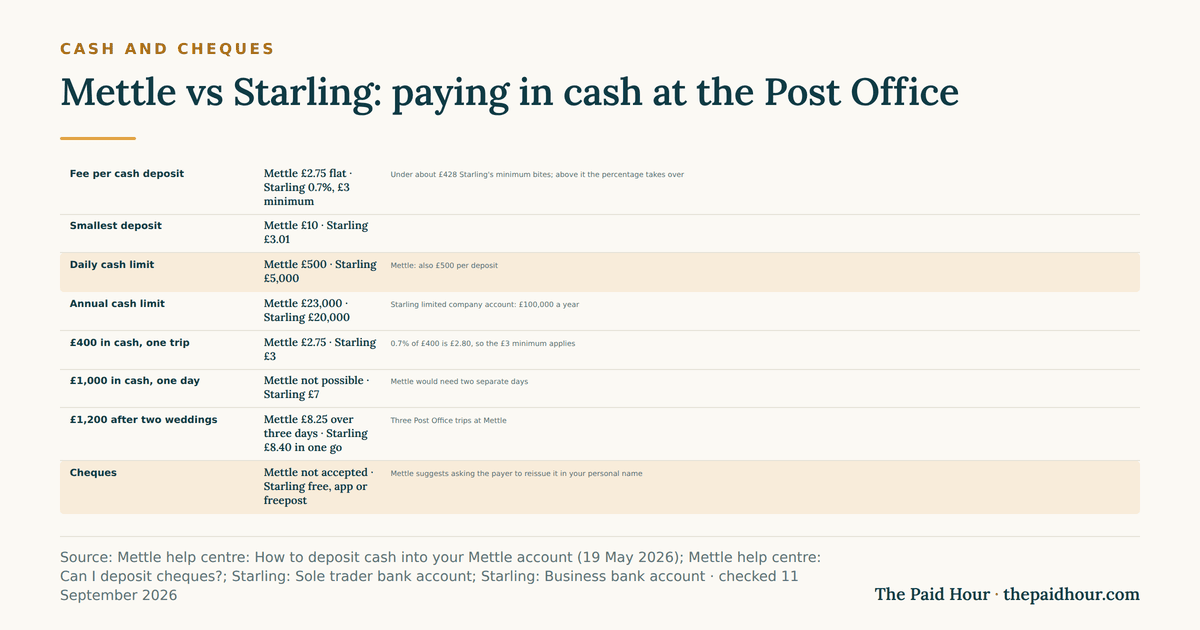
Both accounts take cash at the Post Office. The method differs and so does the maths. On Mettle you generate a barcode in the app and hand over the notes; the money shows by 5pm the next working day. The Mettle help article (dated 19 May 2026) gives the limits: £10 to £500 per deposit, £500 a day, £23,000 a year, and “a flat fee of £2.75 for every cash deposit you make”. The fee is taken after the money lands, so the deposit shows in full and then £2.75 leaves separately. Worth knowing when you reconcile.
Starling charges 0.7% of the deposit, with a £3 minimum, and the minimum single deposit is £3.01. The sole trader account allows £5,000 a day and £20,000 a calendar year; the limited company account keeps the £5,000 daily figure but allows £100,000 a year. Under about £428 a deposit, the £3 minimum bites and Starling is fractionally dearer than Mettle’s £2.75. Above that, the percentage takes over: £1,000 of cash costs £7 at Starling and can’t be paid into Mettle in a single day at all.
Cheques are simpler. Starling’s business page: “pay in cheques for free, via freepost or in the app”. Mettle’s help centre: “No, you can’t pay cheques into your Mettle account.” The suggested workaround is to ask the payer to reissue the cheque in your personal name, which is a conversation you’d rather not have with a new client. One cheque a year is enough to rule Mettle out for some people.
The FreeAgent condition, and what Starling gives you instead
Mettle’s biggest selling point is FreeAgent at no charge. FreeAgent’s pricing page lists the sole trader plan at £19 a month ex VAT (£9.50 for the first six months), so the bundle is worth £228 ex VAT a year at the regular price, or £273.60 once VAT is added. The condition sits in a footnote: “you must make at least one transaction a month from your Mettle account”. Miss a month and FreeAgent fees apply. In practice a standing order for £1 to your personal account keeps the bundle alive, but you have to set it up. Our guide to the free FreeAgent routes covers the NatWest and RBS versions of the same deal.
Starling’s answer changed this year. The old Business Toolkit is gone. In its place is Accounting Essentials, free with the sole trader account, which Starling describes as an HMRC-recognised Making Tax Digital for Income Tax tool that sends quarterly updates to HMRC from inside the account. The MTD page also says “End-of-year declarations coming soon”, so as of 11 September 2026 the final declaration isn’t there yet. That matters if your turnover is over £50,000 and you’re already in MTD; read the MTD for Income Tax rules before relying on a tool that only does three quarters of the job.
Both banks connect free to Xero, QuickBooks and FreeAgent if you’d rather keep your existing software. Mettle’s FreeAgent page and business account page both mention Xero and QuickBooks syncs; Starling lists all three on its marketplace. So the FreeAgent bundle is only a reason to pick Mettle if you’d otherwise pay for FreeAgent. If you’d pay for Xero anyway, it’s worth nothing to you.
Mettle or Starling: side by side
| Checked 11 Sep 2026 | Mettle (sole trader) | Starling (sole trader) |
|---|---|---|
| Monthly fee | £0 | £0 |
| UK payments | Free | Free |
| Cash deposits | Post Office, barcode in app. £2.75 flat per deposit | Post Office. 0.7%, £3 minimum, £3.01 smallest deposit |
| Cash limits | £10 to £500 per deposit, £500 a day, £23,000 a year | £5,000 a day, £20,000 a calendar year (£100,000 for Ltd) |
| Cheques | Not accepted | Free, app or freepost |
| ATM withdrawals | £1 each, £500 a day, £4,000 a month | Free, six a day, £300 daily total |
| Send money abroad | Not available | Available (fees apply) |
| Receive money from abroad | £4 fixed over £10, plus 1.5% if converted | Available, see Starling fee page |
| FreeAgent | Included if you make one transaction a month (£19/mo ex VAT value) | Not included; connects free |
| Built-in MTD tool | Via FreeAgent (HMRC-recognised) | Accounting Essentials, free, quarterly updates; final declaration “coming soon” |
| Paid add-on | Mettle+ £4/mo (quotes) | Accounting Plus £7/mo to April 2027, then £14 (VAT returns) |
| Interest | Savings pot 0.95% AER variable, up to £1m | Not stated on the sole trader page |
| FSCS | £120,000, shared across the NatWest licence | £120,000, Starling Bank Ltd licence |
| Balance limit | £1m main account | None stated |
| Who can open | Sole traders, Ltds with up to 2 PSCs; one account per person | Sole traders (up to 2 accounts for different businesses), Ltds, LLPs |
| Xero / QuickBooks sync | Yes | Yes, free |
| CMA service score, GB, Aug 2026 | 82% (3rd of 17) | 83% (2nd of 17) |
Interest is the one row I’d flag as incomplete. Mettle’s savings pot page quotes 0.95% AER variable on balances from £10. Starling’s sole trader page doesn’t quote a rate, and I’m not going to invent one. If you hold a large tax reserve, check Starling’s current rates page directly, or park the money in a separate business savings account paying more than either.
Two 12-month cost examples
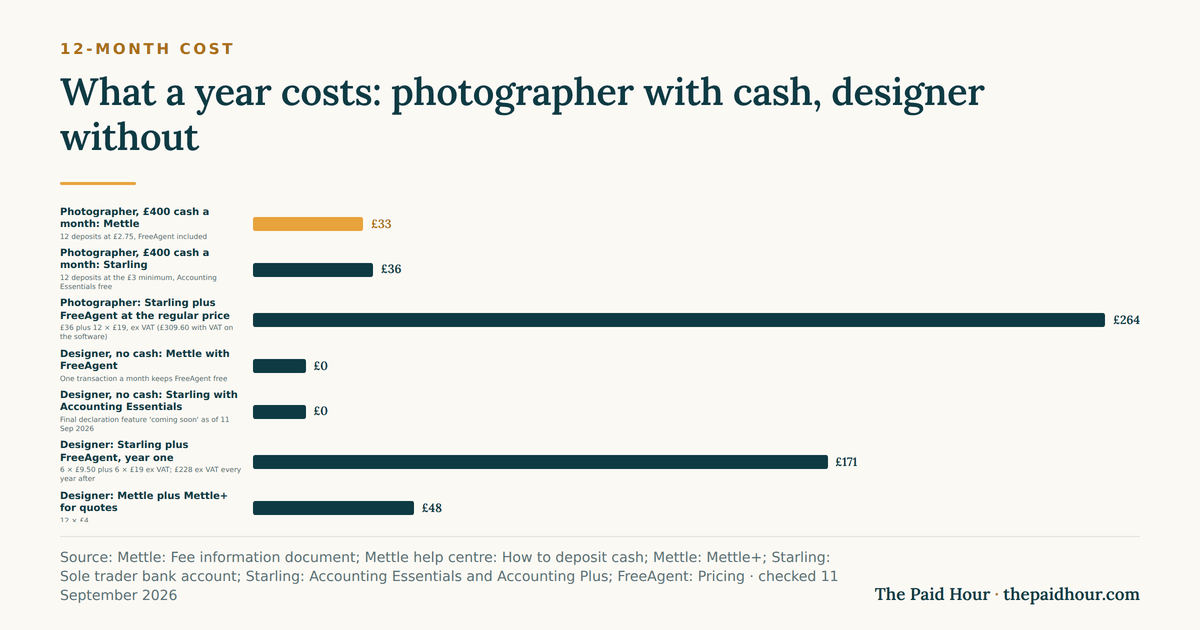
Profile one: a wedding photographer banking £400 cash a month. One Post Office trip a month, twelve a year.
- Starling: 0.7% of £400 is £2.80, which is under the £3 minimum, so each deposit costs £3. 12 × £3 = £36 a year. Monthly fee £0. Total £36.
- Mettle: £400 fits inside the £500 per-deposit and daily limits, so one visit does it. 12 × £2.75 = £33 a year. Annual cash £4,800, well under the £23,000 cap. Total £33.
- Add FreeAgent: Mettle £0 (provided a transaction leaves the account every month). Starling plus FreeAgent at the regular price: £36 + (12 × £19) = £264 ex VAT, or £309.60 with VAT on the software.
So on banking alone the gap is £3 a year. The gap only opens if the photographer wants FreeAgent specifically. Now change one detail: two weddings in one weekend and £1,200 in cash. Starling takes it in one go for £8.40. Mettle needs three separate days at £2.75 each, £8.25, and three trips. Cheaper on paper, worse in practice.
Profile two: a freelance designer, no cash, no cheques, paid by bank transfer. About 40 invoices a year, not VAT registered.
- Starling with Accounting Essentials: £0 + £0 = £0 a year.
- Mettle with FreeAgent included: £0 + £0 = £0 a year.
- Starling with FreeAgent instead: year one is 6 × £9.50 + 6 × £19 = £171 ex VAT; every year after is £228 ex VAT (£273.60 inc VAT).
- Mettle with quotes (Mettle+): 12 × £4 = £48 a year. Starling’s invoicing is free but its pages don’t mention quotes, so I can’t score that.
For the designer the banks cost the same. The decision is really a software decision: FreeAgent’s full bookkeeping, Self Assessment filing and cashflow forecast for free, or Starling’s lighter built-in tool with the final declaration still on the way. If you want a system for the money side that doesn’t depend on which bank you picked, the Freelancer Money System course walks through it, and the free UK tax calculator gives you the reserve figure to put in whichever tax pot you end up with.
FSCS, limits and the August 2026 service scores
Both are real banks, not e-money accounts, and both are covered by the FSCS up to £120,000, the limit that has applied since 1 December 2025 according to the FSCS. The detail most comparisons skip is on Mettle’s own FSCS page: the £120,000 is “applied to the total of any deposits you have with” National Westminster Bank plc, NatWest Premier, Ulster Bank, NatWest Boxed and Mettle. If your personal current account is with NatWest and your business account is Mettle, they share one limit. Starling Bank Limited has its own licence, so a Starling business account and a NatWest personal account are protected separately. Also note that as a sole trader, your personal and business money at the same bank are one claim. The FSCS guide for business accounts covers the Ltd company position, which is different.
Mettle’s eligibility page caps the main account at £1 million, allows one account per person, and takes sole traders and limited companies with no more than two persons of significant control, only one of whom can use the app. No partnerships, LLPs or charities. Outgoing bank transfers are limited to £10,000 per transaction. Starling wants a UTR from a sole trader who is registered with HMRC, lets you hold up to two sole trader accounts for different businesses, and won’t take client money. Neither is a problem for most freelancers.
Service quality is close to a draw. The CMA-mandated survey published in August 2026 (fieldwork July 2025 to June 2026, about 1,200 customers per provider) put Monzo first at 85%, Starling second at 83% and Mettle third at 82% of customers extremely or very likely to recommend their provider. Those figures are from the results Starling is required to publish; Mettle publishes the same table. One percentage point between second and third is noise. Both offer support from people rather than a chatbot loop; Starling’s is 24/7, Mettle’s page says “help from real people” without stating hours.
The fuller picture of each on its own is in the Starling business account review and the Mettle review. If neither fits, the best business bank accounts for sole traders round-up covers the rest of the field.
Where to sign up
Starling
Free, takes cash up to £5,000 a day and cheques for free, sends money abroad. The catch: no FreeAgent, and its own MTD tool can’t yet file the final declaration.
Visit StarlingMettle
Free FreeAgent worth £228 a year ex VAT, as long as one payment leaves the account each month. The catch: £500 a day in cash, no cheques, no outbound international payments.
Visit MettleThree questions that come up
Is Mettle better than Starling for sole traders?
Only if you want FreeAgent and never handle cheques or more than £500 of cash a day. On those terms Mettle saves £228 a year ex VAT. For everyone else Starling’s higher cash limits, free cheque deposits and outbound international payments make it the safer default. Service scores are 83% and 82%, so that isn’t the tiebreaker.
Can you pay cheques into a Mettle account?
No. Mettle’s help centre says “you can’t pay cheques into your Mettle account” and suggests asking the payer to reissue the cheque in your personal name or pay another way. Starling accepts cheques free in the app or by freepost. Checked 11 September 2026.
Is FreeAgent really free with Mettle?
Yes, on one condition: at least one transaction must leave your Mettle account every month. Miss a month, or close the account while still using FreeAgent, and FreeAgent’s normal price applies (£19 a month ex VAT for sole traders). FreeAgent’s optional paid add-ons aren’t covered by the bundle either.
If you’re deciding this week
- Count last year’s cash and cheque income. Any cheques, or any single day over £500 cash, and Starling wins before you read another word.
- Decide on software first, bank second. If FreeAgent is the plan, Mettle’s bundle is worth £228 a year ex VAT; if Xero, QuickBooks or Starling’s built-in tool is the plan, the bundle is worth nothing.
- Check where your personal current account sits. NatWest, Ulster Bank or NatWest Premier customers share one £120,000 FSCS limit with Mettle.
- If you pick Mettle, set up a monthly £1 standing order out of the account on day one so the FreeAgent condition is never missed.
- If you pick Starling and turn over more than £50,000, confirm the final declaration feature has arrived before your first MTD year-end, or connect FreeAgent, Xero or QuickBooks instead.
- Have your UTR ready for either application, and read whether you need a separate business account at all if you’re still on a personal account.
Sources
- Mettle: Fee information document
- Mettle help centre: How to deposit cash into your Mettle account
- Mettle help centre: Can I deposit cheques?
- Mettle help centre: Are there limits on my transactions?
- Mettle: FreeAgent included with a Mettle business bank account
- Mettle: Mettle+
- Mettle: Savings pots
- Mettle: Check your eligibility
- Mettle: FSCS key information
- Mettle: Key account information and limitations
- Starling: Sole trader bank account
- Starling: Business bank account
- Starling: Accounting Essentials and Accounting Plus
- Starling: Making Tax Digital tool
- Starling: FSCS protection
- Starling: Business current account service quality results, August 2026 (CMA requirement)
- FSCS: Banks and building societies, £120,000 limit
- FreeAgent: Pricing
Figures checked against Mettle, Starling, FreeAgent and FSCS pages on 11 September 2026. This is general information, not financial or tax advice.
Want to pay yourself a salary from irregular income?
Freelancer Money System 2026/27. Seven modules and five working sheets that pay you a predictable monthly amount out of unpredictable income: the account structure, the percentages, and where every pot should sit.
- A salary set from your trailing twelve-month low, not the average, with the calculator that finds it
- The day-it-lands allocation split, so tax and costs are moved before you can spend them
- The written drought plan for a bad quarter, the FSCS licence checker, and the surplus waterfall for a good year
Normal budgeting assumes a payday. Freelance income does not have one. The fix is not discipline, it is structure, and structure is a one-afternoon job.
Buying more than one? All ten 2026/27 courses for £107, against £328 at full price.
Read next
- FreeAgent Review 2026: Worth It for Sole Traders?
- Switching Business Bank Accounts: The Easy 7-Day Process