
Pensions When You’re Self-Employed: Tax Relief & Options
No one auto-enrols the self-employed: protecting your State Pension for £3.65 a week, the £80-becomes-£100 relief, and the £60,000 ceiling.
Started working for yourself in 2025/26? Register for Self Assessment by Monday 5 October.New to self-employment in 2025/26? Register with HMRC by 5 October. See what to do
Fifty-odd guides sit under this heading. They answer four questions, in this order.
Do I have to file at all? Whether you need to send a return and what the £1,000 trading allowance actually covers settle it for most people. Side income from a platform has its own wrinkle: Vinted, eBay and Etsy now report sellers to HMRC, and the line between a hobby and a business is not about how you describe it.
How do I file it? Filing your first Self Assessment, step by step is the sequence, including the 5 October registration deadline that catches people four months before they think about tax. Your UTR arrives by post around fifteen days after you register, so the order matters. Which return you are filing and when it is due, and if you miss it, what the penalties actually come to.
What do I owe, and what can I take off? Income tax bands for 2026/27, National Insurance, and how much to set aside as you go. On the other side: allowable expenses, the ones that are not allowable, simplified flat rates and capital allowances. If the bill is over £1,000, payments on account add half again — and you can reduce them when the year is going to be worse.
What is changing? Making Tax Digital for Income Tax is the big one, with quarterly deadlines and a points-based penalty system that works nothing like the old one. And if you cannot pay, Time to Pay exists and works better before the deadline than after.
Every figure on these pages links to its HMRC source and carries the date it was checked. General information, not tax advice.
No one auto-enrols the self-employed: protecting your State Pension for £3.65 a week, the £80-becomes-£100 relief, and the £60,000 ceiling.
Self-employed and worried about being off work? Here’s exactly what you can and can’t claim — sick pay, Maternity Allowance, and Universal Credit.
Missed the 5 October deadline to register as self-employed? Here’s how HMRC’s failure to notify penalty works, and what to do right now.
IR35 confuses most freelancers. Here’s who it actually applies to, why sole traders are usually exempt, and what to watch for in 2026.
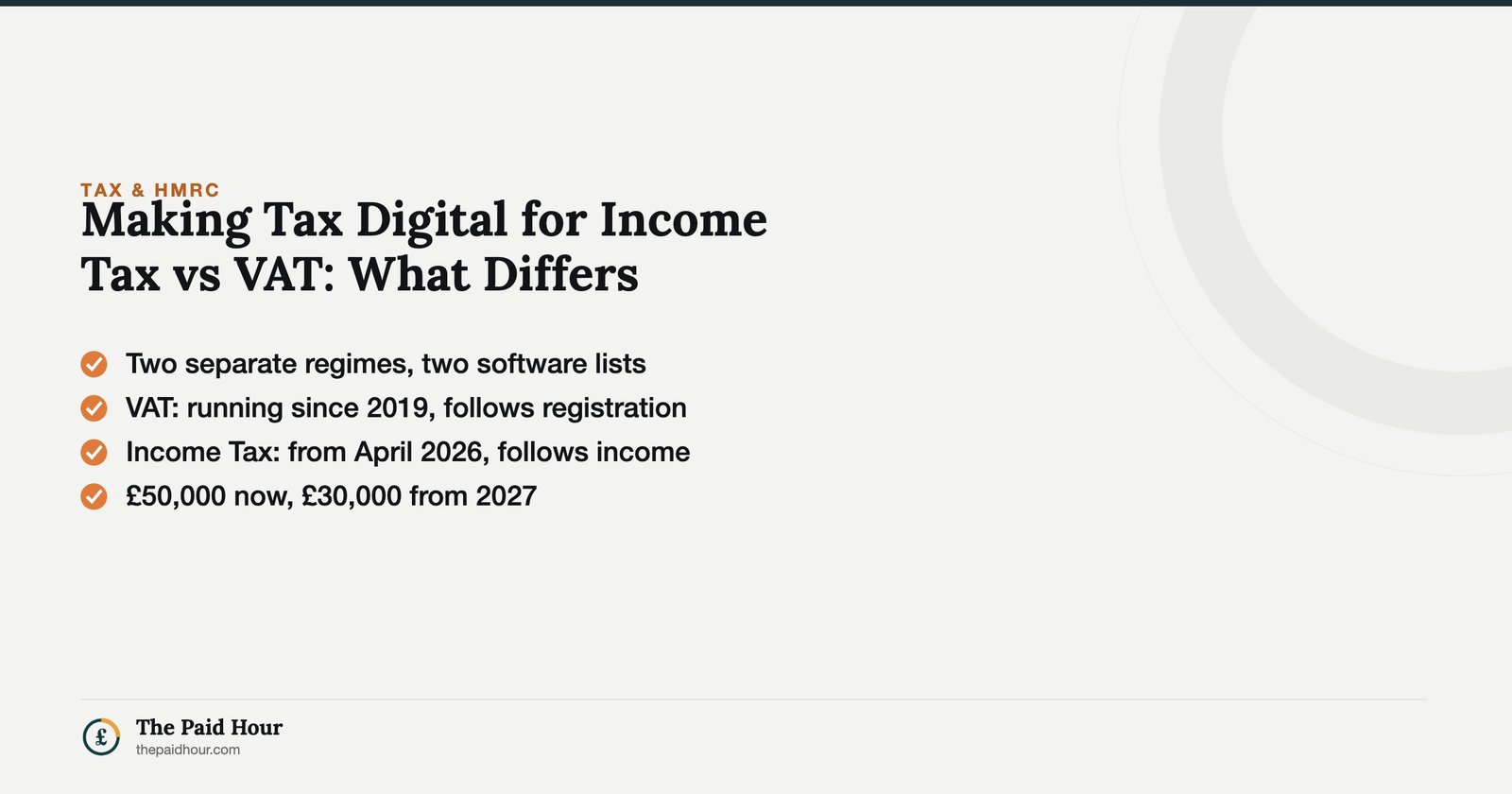
Making Tax Digital for VAT and MTD for Income Tax are two separate schemes. Here’s who each one applies to right now, and how they differ.
A step-by-step guide to registering for VAT as a UK sole trader or freelancer — what you need, how to apply, and what happens while you wait.
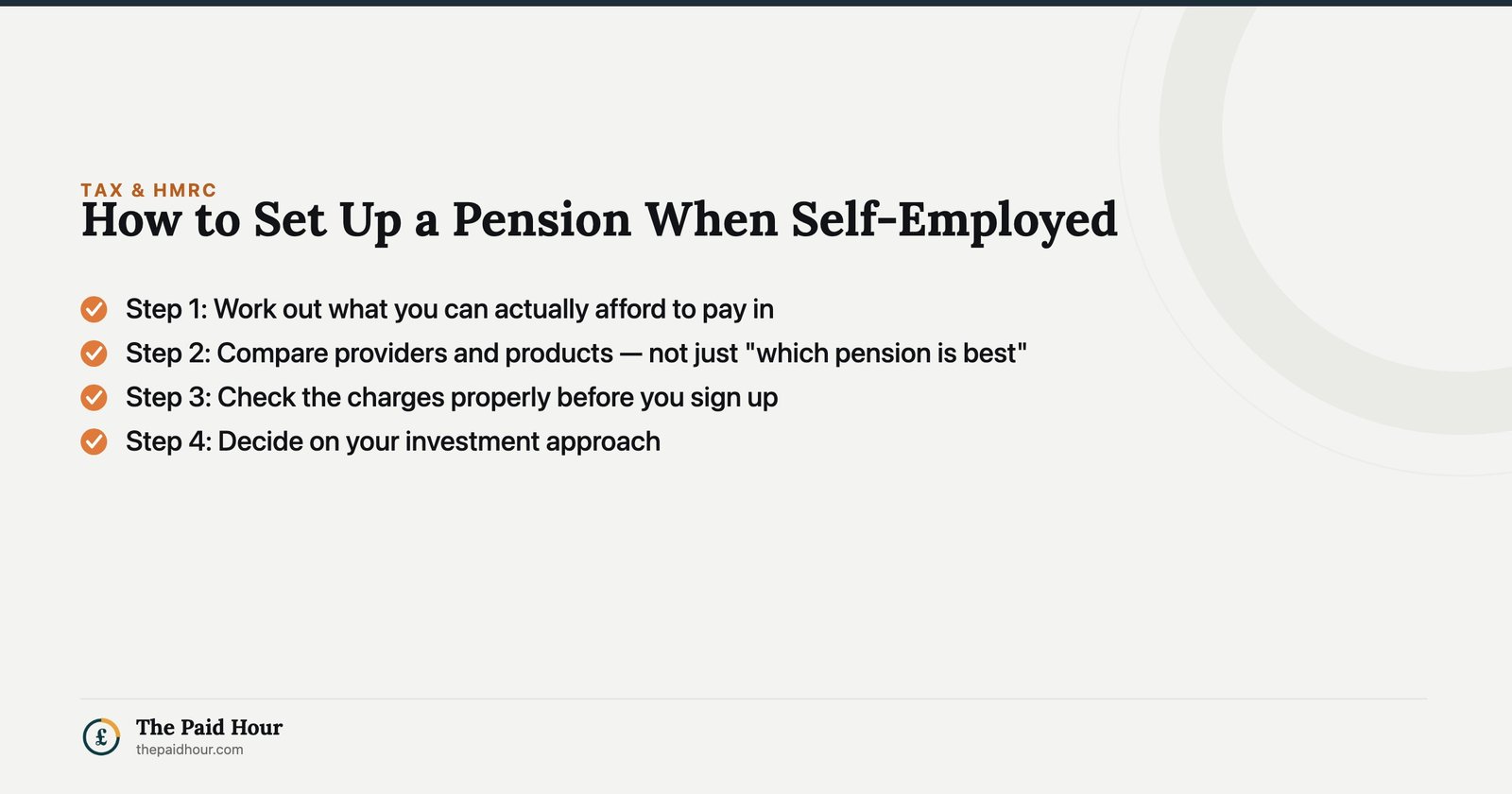
A step-by-step process for opening a pension as a self-employed UK worker: comparing providers, checking charges and setting up contributions.
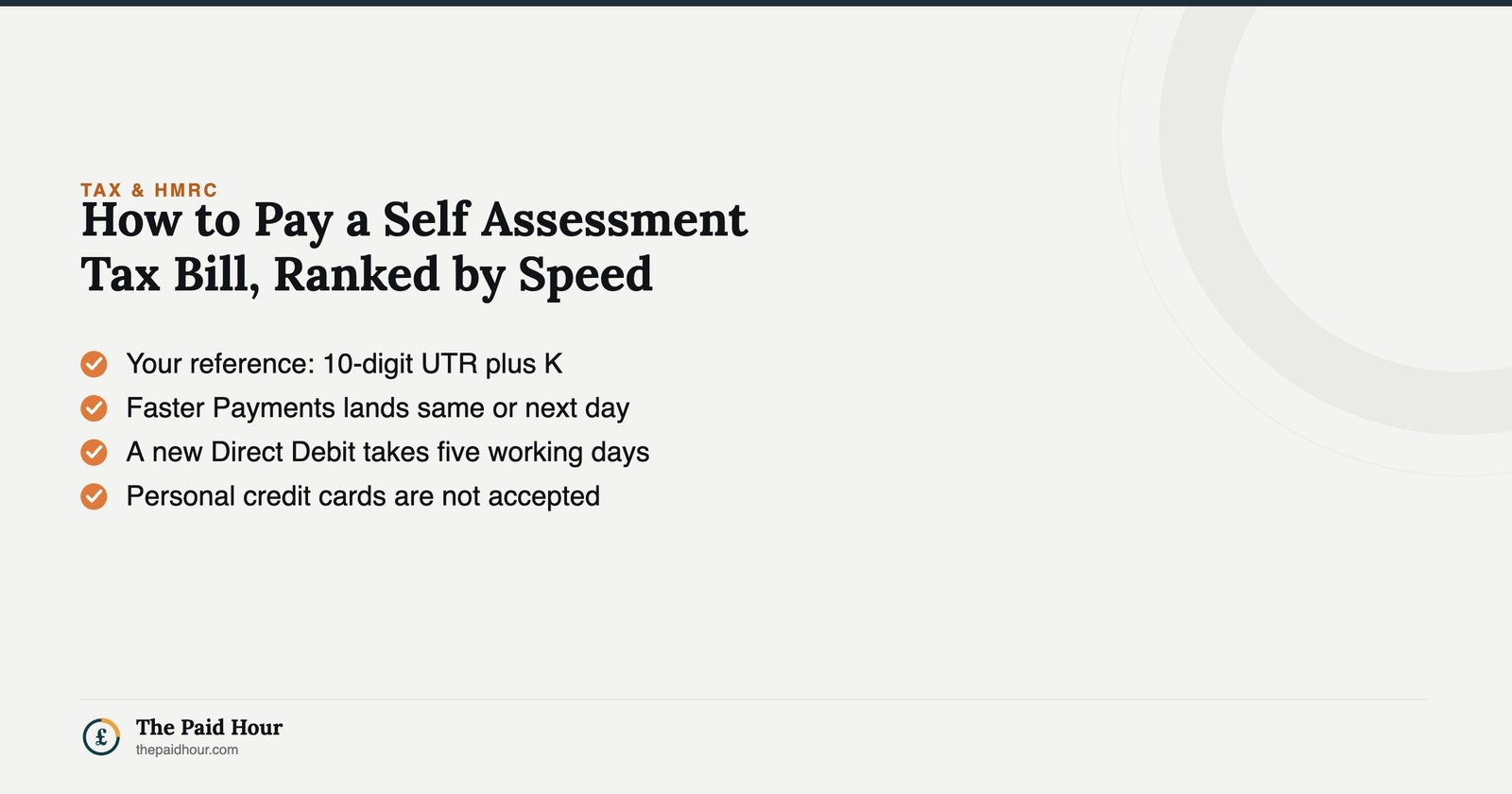
Paying a Self Assessment tax bill: Faster Payments and debit card reach HMRC same or next day, a new Direct Debit takes five working days. Every method timed.
How much to save for tax when self-employed: no HMRC rule says 25–30%. Real 2026/27 numbers — 15.1% at £30,000 profit, 23.1% at £60,000.
Selling online or freelancing casually? Here’s HMRC’s actual “badges of trade” test for whether an activity counts as trading at all.
Employed and self-employed at once? Here’s exactly how PAYE and Self Assessment combine for tax and National Insurance in the UK.
Disallowable expenses for self-employed sole traders: client entertainment, fines, ordinary clothing, and mixed-use costs HMRC won’t let you claim.