
Quick answer: Crunch bundles bookkeeping software with real, ACCA-regulated accountants. Sole trader plans start from £27 + VAT a month, priced by quote on your turnover and transaction volume, with Self Assessment filing included. That is roughly double the price of software alone, and whether it earns the difference comes down to one question: do you need answers, or just records?
Table of Contents
Most tools reviewed on this site sit at one of two extremes. Pure software (QuickBooks, Xero, FreeAgent), organises your numbers and leaves every judgement call to you. Pure filing services (Taxfix and TaxScouts, or GoSimpleTax), handle one return a year and disappear. Crunch is built on the bet that plenty of freelancers want the thing in between: software for the day-to-day, and a qualified accountant on call when the software cannot answer the question.
This review is about whether that middle position is worth paying double for.
What Crunch is
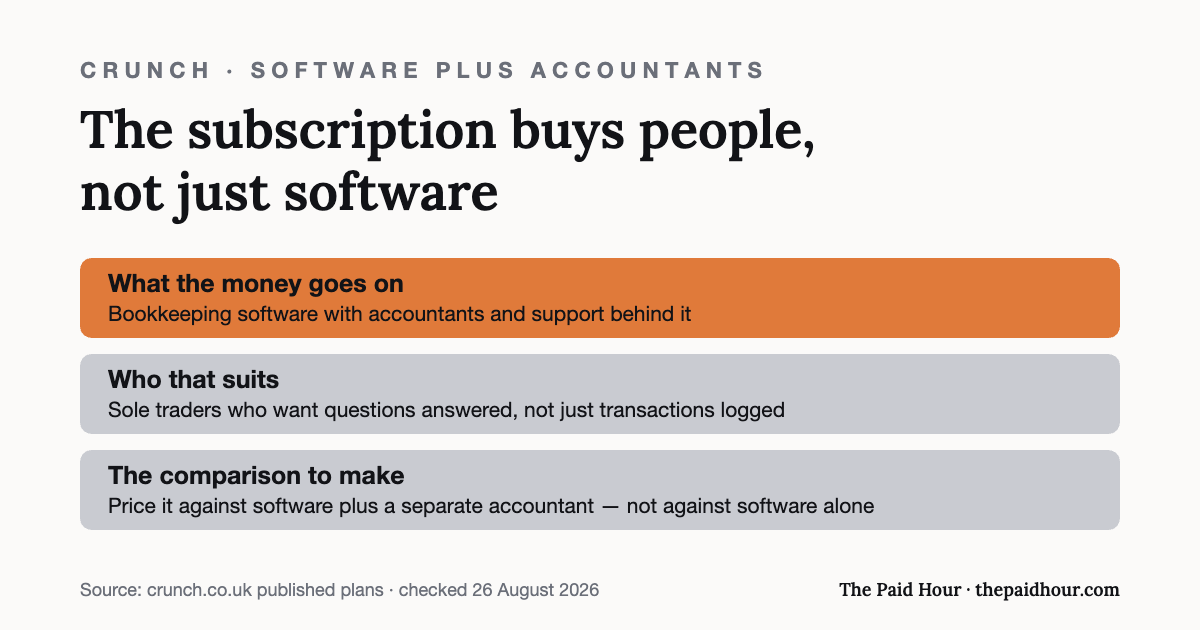
Crunch is bookkeeping software (invoicing, expenses, bank feeds, the usual), with accountancy support built into the subscription rather than sold beside it. The accountants are ACCA-regulated and available year-round, not just in January. They handle filings and answer tax questions directly, which is the part no software subscription gives you.
That makes Crunch harder to compare than it first looks. Put it next to Xero and it seems expensive. Put it next to hiring an accountant separately and buying software on top, and it starts to look like the cheap option. Both comparisons are honest; they just answer different questions.
What it costs, checked 25 August 2026
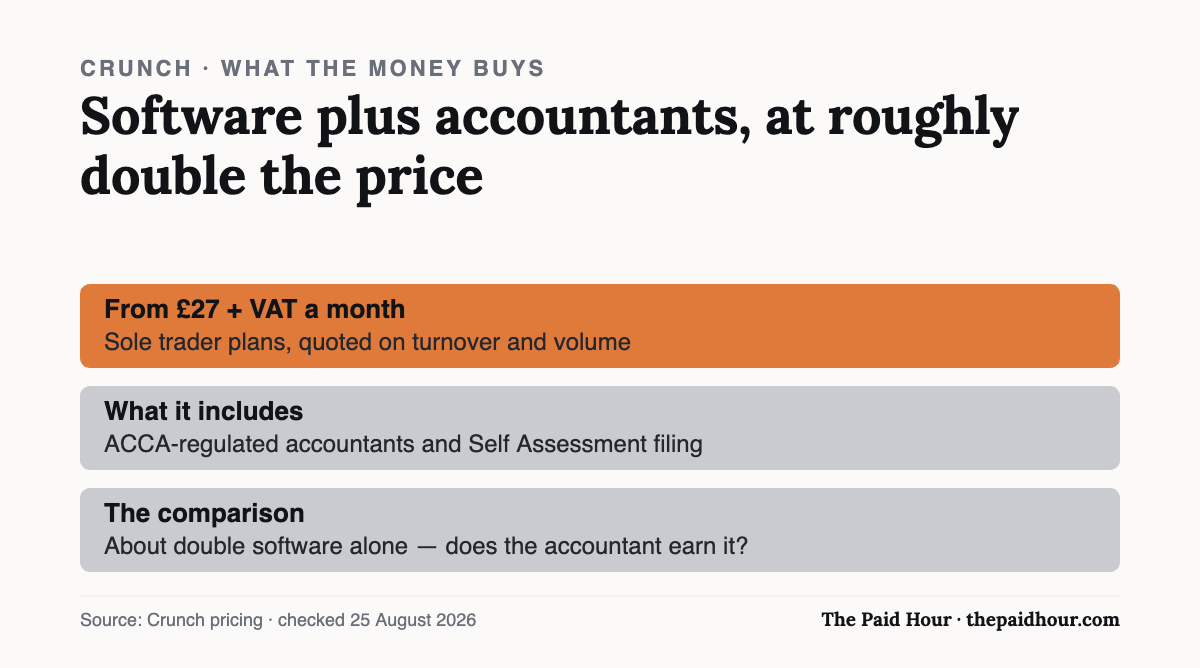
Crunch does not publish a flat price list for sole traders. Its pricing page shows sole trader packages from £27 + VAT a month, with the exact figure generated by an “Instant Quote” tool that asks for your annual turnover, your monthly transaction volume, and whether you sell through e-commerce or retail. Budget a few minutes for the quote rather than expecting one number to fit everyone.
The entry sole trader package includes the parts that matter: Self Assessment filing, a tax optimisation review, unlimited accountant support, and Making Tax Digital software for Income Tax, relevant from April 2026 if your qualifying income is over £50,000, as our MTD for Income Tax guide explains. Limited company packages start at £90 + VAT a month, a different bracket for a different set of filing obligations.
One correction worth making out loud: an earlier version of this review quoted a £10 entry price. Crunch’s own pricing page, checked 25 August 2026, says £27 + VAT, and that is the number to plan around.
What the accountant actually buys you
Software can tell you what you spent. It cannot tell you whether a cost is deductible, how to treat a one-off capital purchase, whether the limited company question is worth revisiting this year, or what to do when HMRC opens an enquiry. Those are the moments Crunch is selling an answer to, and they are exactly the moments a software-only subscription leaves you searching forums at midnight.
Crunch’s marketing cites average client savings in the low thousands from tax optimisation. Treat those as what they are. Averages from the company selling the service instead of a promise about your return. The honest version of the claim is smaller but still real: a person who files hundreds of returns a year will catch allowances and timing decisions that you, filing one, will not.
The comparison that matters: £27 against software alone
Here is the comparison stripped of marketing. Software alone currently costs:
- QuickBooks Sole Trader Plus: £10 + VAT a month
- Xero Ignite: £18 + VAT since 1 September 2026, with a 20-invoice monthly cap
- FreeAgent: £19 + VAT, or free if you bank with NatWest, RBS, Ulster Bank or Mettle
- GoSimpleTax: £69.99 a year for the Self Assessment filing alone, no bookkeeping
Against that line-up, Crunch’s £27 + VAT buys the software and the accountant and the return. Add a separately hired accountant to any of the software-only options and you will usually clear £27 a month with ease. Skip the accountant entirely and Crunch is the expensive choice by some distance. There is no trick to it, the price difference is the accountant, priced in.
Who should pay for it, and who shouldn’t
Pay for Crunch if the questions have started to outgrow the software: you are wondering about switching structure, your deductions feel like guesswork, your income is climbing toward thresholds where mistakes get expensive, or you simply want someone accountable to check the return before it goes. The subscription replaces both the software bill and the accountant’s.
Skip it if you are confident running your own books and your affairs are simple, one trade, straightforward expenses, income comfortably below the higher-rate band. A standalone tool such as Sage or Zoho Books does the record-keeping for less, and you can buy a one-off filing service in January if you want a second pair of eyes on the return itself.
The honest verdict
Crunch is not trying to be the cheapest line on a comparison table, and judged as software alone it loses that table every time. Judged as an accountant with software attached, £27 + VAT is competitive, most independent accountants charge more for the return alone. The catch is the quote-based pricing: your number may not be £27, and you will not know until you run the quote. Run it before deciding, and compare the figure against what you pay today for software plus filing rather than against software alone.
Before you commit: check the MTD list
Crunch sells the accountant as much as the software, and that is a fair trade for some people. It does not change what happens when Making Tax Digital for Income Tax reaches you: the filing has to come out of software HMRC recognises. HMRC’s software finder is the list that settles it, and it is worth checking against the exact plan you are quoted rather than the brand name. An accountant in the package does not exempt the package from the rules.
Want the whole tax system, not one rule?
HMRC Tax & Expense Mastery 2026/27. Nine modules and eleven working templates that take a UK freelancer from “do I even need to register” to a correct return, with MTD quarters built in.
- Fifteen expense categories, with the trap inside each one (training, clothing, meals, the seven-year pre-trading rule)
- Home and vehicle: flat rate against actual cost, with the £312 break-even worked out and the mileage lock-in rule
- The year-one payments-on-account cash shock, and the routine that stops it landing twice
HMRC does not send a list of what you forgot to claim. Most freelancers leave several hundred pounds of legitimate expenses on the table every single year, and the return still gets filed.
Buying more than one? The Complete Freelancer System, all five for £87, against £215 at full price.
Sources
- Crunch: pricing (sole trader from £27 + VAT, limited company from £90 + VAT, Instant Quote; checked 25 August 2026)
Prices checked against Crunch’s own pricing page on 25 August 2026. Crunch quotes final pricing individually, so treat the figures here as entry points. General information, not tax or financial advice.